solvent extraction
Quick Summary
Solvent extraction is a chemical process used to separate components of a mixture. It involves using two immiscible liquids, where one liquid (the solvent) dissolves the desired substance from the other liquid. This process is fundamental in various industries, including the recovery of oils from seeds and the purification of rare-earth elements.12
The effectiveness of solvent extraction depends on the "separation factor," which indicates how easily components can be divided. If the factor is high, a single-stage process may suffice. For less distinct separations, a multistage process, where the extraction is repeated multiple times, is employed to achieve higher purity. Common extractors include continuous units like the Bollman or DeSmet designs, which facilitate a counterflow of solvent and material for efficient separation.31
Ask Britannica AI about this topic
Britannica doesn't have a full article on this topic, so we've curated a list of our relevant coverage.




 heavy oil and tar sandSolvent extraction
Solvent extractions also have been used to recover heavy oils. In this process a solvent or emulsifying solution is injected into a heavy oil reservoir. The fluid dissolves or emulsifies the oil as it advances through the permeable reservoir. The oil and fluid…
Read MoreSolvent extractions also have been used to recover heavy oils. In this process a solvent or emulsifying solution is injected into a heavy oil reservoir. The fluid dissolves or emulsifies the oil as it advances through the permeable reservoir. The oil and fluid…
Read More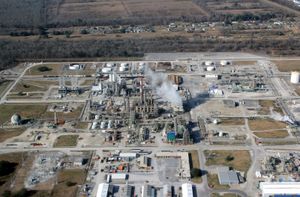 petroleum refiningSolvent extraction
Solvent extraction processes are employed primarily for the removal of constituents that would have an adverse effect on the performance of the product in use. An important application is the removal of heavy aromatic compounds from lubricating oils. Removal improves the viscosity-temperature relationship…
Read MoreSolvent extraction processes are employed primarily for the removal of constituents that would have an adverse effect on the performance of the product in use. An important application is the removal of heavy aromatic compounds from lubricating oils. Removal improves the viscosity-temperature relationship…
Read More