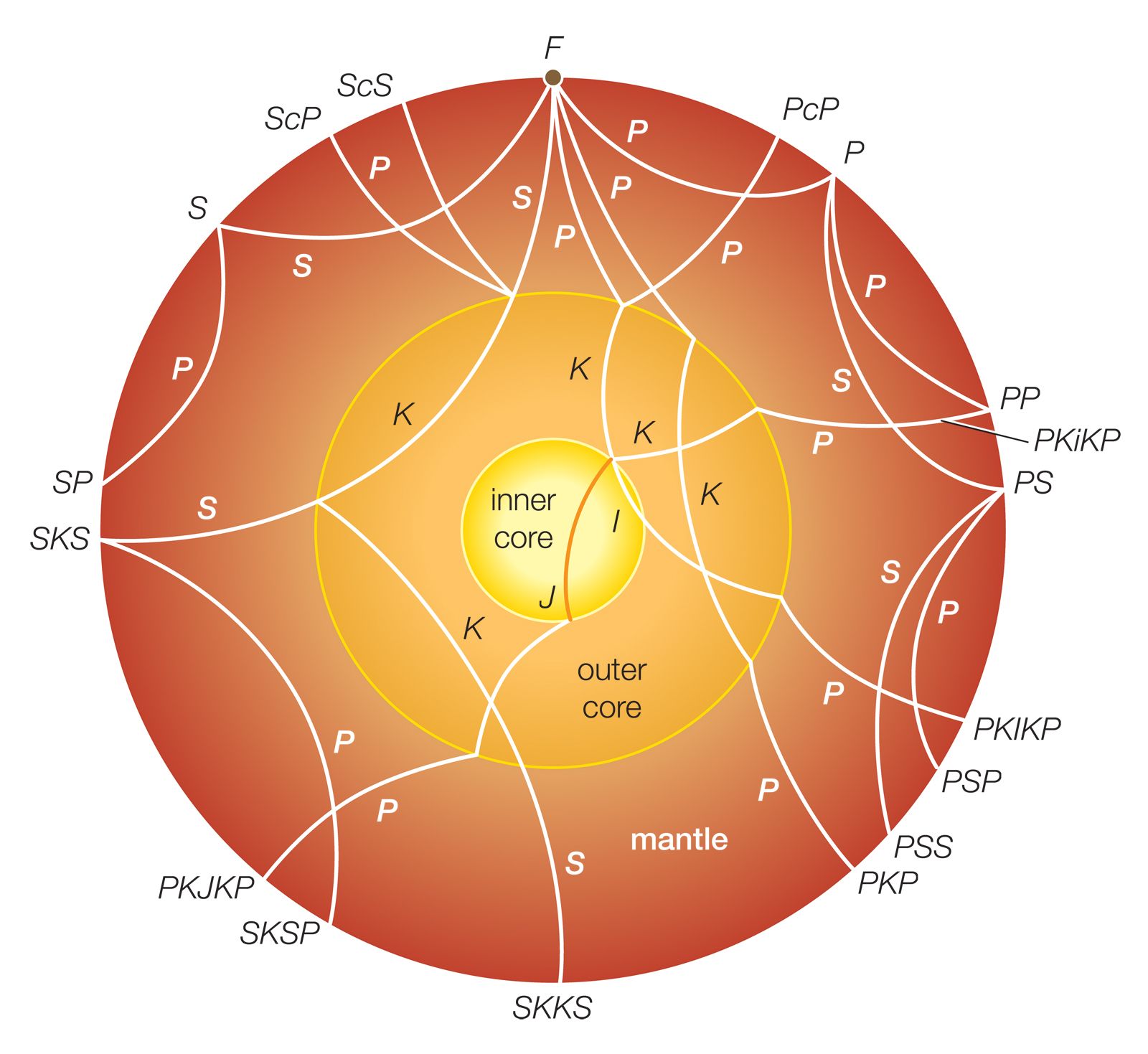

seismic ray
Quick Summary

Seismic rays are paths that seismic waves follow through the Earth's interior. These waves are generated by sources like earthquakes or explosions and are detected by instruments called seismographs.1
There are two main types of body waves:
* P-waves (primary waves): These are longitudinal waves that travel through solids and liquids, compressing and expanding the material they pass through, similar to sound waves. They are the fastest seismic waves and are the first to reach a seismograph.2
* S-waves (secondary waves): These are transverse waves that can only travel through solid materials. They involve a shearing motion of the rock.2
Surface waves, like Love and Rayleigh waves, travel along the Earth's surface after the body waves have passed. Seismic ray analysis helps geophysicists understand the Earth's internal structure by studying how these waves travel, refract, and reflect within the planet.1
Ask Britannica AI about this topic
Britannica doesn't have a full article on this topic, so we've curated a list of our relevant coverage.