
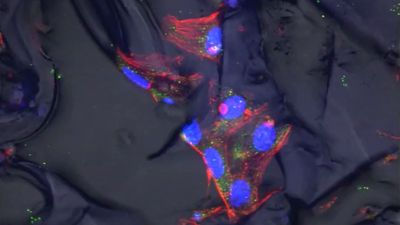

scaffold
Quick Summary

In biology, a scaffold is a structure used in tissue engineering to support the growth of new tissue. These scaffolds can be made from natural materials like collagen or synthetic, biodegradable polymers.
Cells are seeded onto the scaffold, and then incubated with growth factors. These factors encourage the cells to grow and divide, forming a new tissue. Once implanted, the scaffold is eventually absorbed by the body. This process is crucial for developing biological substitutes for damaged or diseased tissues, such as skin, cartilage, and bone.1
Ask Britannica AI about this topic
Britannica doesn't have a full article on this topic, so we've curated a list of our relevant coverage.
 regenerative medicineTissue scaffolds and soluble repair factors
Scaffolds and soluble factors, such as proteins and small molecules, have been used to induce tissue repair by undamaged cells at the site of injury. These agents protect resident fibroblasts and adult stem cells and stimulate the migration of these cells into damaged areas, where…
Read MoreScaffolds and soluble factors, such as proteins and small molecules, have been used to induce tissue repair by undamaged cells at the site of injury. These agents protect resident fibroblasts and adult stem cells and stimulate the migration of these cells into damaged areas, where…
Read More- regenerative medicine
…cells onto natural or biomimetic scaffolds (see tissue engineering). Natural scaffolds are the total extracellular matrixes (ECMs) of decellularized tissues or organs. In contrast, biomimetic scaffolds may be composed of natural materials, such as collagen or proteoglycans (
Read More…cells onto natural or biomimetic scaffolds (see tissue engineering). Natural scaffolds are the total extracellular matrixes (ECMs) of decellularized tissues or organs. In contrast, biomimetic scaffolds may be composed of natural materials, such as collagen or proteoglycans (
Read More