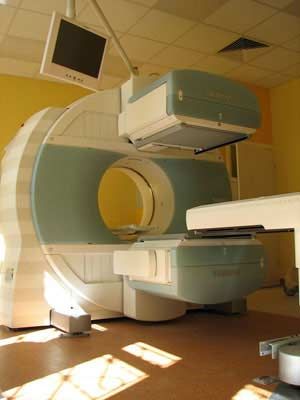

radioactive scanning
Quick Summary

Radioactive scanning, also known as nuclear medicine, is a medical specialty that uses radioactive isotopes for diagnosing and treating diseases. This technique allows doctors to noninvasively identify specific molecular activity within the body, aiding in early disease detection and monitoring treatment responses.1
In radioisotope scanning, a small amount of a radioisotope is introduced into the body, typically through injection. This isotope is absorbed by different organs in varying amounts. By detecting the radiation emitted, clinicians can chart the isotope's concentration to identify abnormalities in size and shape within organs. Technologies like positron emission tomography (PET) are commonly used for this purpose. The radioisotopes used have short half-lives, ensuring they decay and are eliminated from the body before causing harm. For example, iodine-131 concentrates in the thyroid gland, helping to diagnose thyroid function issues.123
Ask Britannica AI about this topic
Britannica doesn't have a full article on this topic, so we've curated a list of our relevant coverage.