

pyramidal tract
Quick Summary
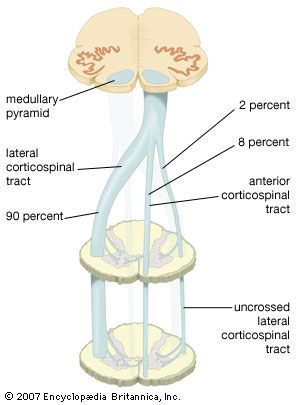
The pyramidal tract, also known as the corticospinal tract, is a crucial part of the motor system in the human nervous system. It consists of motor fibers that originate in the cerebral cortex and descend through the brainstem, specifically the medulla oblongata, before continuing into the spinal cord.123
The primary function of the pyramidal tract is to control skilled, voluntary movements. Most of these fibers (80-90%) cross over to the opposite side of the body in the lower medulla, which is why damage to one side of the brain can affect the opposite side of the body. The term "extrapyramidal" refers to nerve tracts and systems outside of the pyramidal tracts, which are involved in different aspects of motor control.234
Ask Britannica AI about this topic
Britannica doesn't have a full article on this topic, so we've curated a list of our relevant coverage.
