protein hormone
Quick Summary
Protein hormones are a major class of hormones produced by endocrine glands. They are water-soluble and transported through the bloodstream. These hormones are synthesized from amino acids and initially exist as inactive prohormones, which are then split by enzymes into their active forms before release.1
Key aspects of protein hormones include:
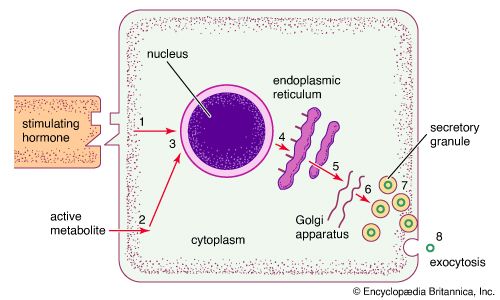
* Synthesis: They are produced within cells, often directed by messenger RNA (mRNA) transcribed from DNA. The process involves the endoplasmic reticulum and Golgi apparatus before secretion.2
* Action: Protein hormones bind to specific receptors on the surface of target cells, initiating a cascade of chemical responses within the cell.1
* Examples: Hormones like insulin and glucagon, produced by the pancreas, are protein hormones. Thyroid hormones and calcitonin from the thyroid gland, as well as hormones from the pituitary gland such as growth hormone and luteinizing hormone, are also protein or peptide in nature.34
Ask Britannica AI about this topic
Britannica doesn't have a full article on this topic, so we've curated a list of our relevant coverage.