


- Also called:
- prescribed burning or controlled burning

prescribed fire
-
What is a prescribed fire?
A prescribed fire is a land management technique involving the intentional application of fire to vegetation under specific conditions. It aims to restore fire regimes in ecosystems or reduce dry brush in areas prone to wildfires.
Two main types exist: broadcast burning across large areas and pile burning of discrete fuel piles. Managers create detailed burn plans defining suitable weather, fuel conditions, desired fire behavior, and needed effects.
Modern uses minimize wildfire risk by reducing vegetation and fuel. Prescribed fires improve ecosystem health in various landscapes by reducing competition, diseases, and pests. They can also restore ecosystems and enhance conditions for fire-adapted species, improving ecological conditions and promoting conservation. However, there can be risks to local communities and negative impacts on natural resources.
2 Britannica SourcesCreated from Britannica articles using AI. AI can make mistakes, so verify using Britannica articles. -
Why do people use prescribed fires?
Prescribed fires are used in land management to minimize the risk of wildfires by reducing vegetation and fuel load. They also improve ecosystem health in forests, woodlands, shrublands, and grasslands by reducing competition and decreasing diseases and pests. Many ecosystems are fire-adapted, so prescribed fires can improve ecological conditions, especially in areas where fire has been suppressed. Periodic burning of rangelands can also increase the productivity and quality of forage plants for livestock.
2 Britannica SourcesCreated from Britannica articles using AI. AI can make mistakes, so verify using Britannica articles. -
How do experts safely start and control prescribed fires?
Prescribed fire experts consider fuel type, weather, and terrain to safely implement burns. They control fire behavior using ignition patterns like strips or spots, with strip fires being common due to control over the number and spacing of ignited strips. Head fires, which burn with the wind or slope, have the highest intensity, while backing fires, burning against the wind or slope, have the lowest. Flanking fires have an intermediate intensity. Practitioners also consider fire effects like the amount of fuel burned, smoke produced, and vegetation response, and they determine reburn intervals based on fuel accumulation or the area's fire return interval.
2 Britannica SourcesCreated from Britannica articles using AI. AI can make mistakes, so verify using Britannica articles. -
What benefits do prescribed fires provide to forests and grasslands?
Prescribed fires, a land management tool, offer multiple benefits to forests and grasslands. They reduce vegetation, minimizing the risk of wildfires by decreasing fuel loading. These fires improve ecosystem health by reducing competition, diseases, and pests.
Many ecosystems are fire-adapted, with native species enhanced or dependent on fire for survival. Prescribed burns restore these ecosystems, promoting historical conditions altered by fire suppression. Periodic burning of rangelands increases the productivity and quality of forage plants for livestock. They are also an important conservation tool, fostering the preservation of these ecosystems.
2 Britannica SourcesCreated from Britannica articles using AI. AI can make mistakes, so verify using Britannica articles. -
What are some possible risks or problems with using prescribed fire?
While prescribed fires are generally beneficial, they carry potential risks. If implemented early in the growing season, ground-nesting birds may suffer a loss of nests or eggs. There's also a slight chance that prescribed burns could escape and cause property damage.
To successfully implement burns, practitioners must consider factors such as fuel type, weather conditions, and topography. Weather conditions like dry, hot, windy environments are the least conducive to safe burns. Managers also need to consider the amount and composition of smoke produced because its constituents have different impacts on air quality and human health.
1 Britannica SourceCreated from Britannica articles using AI. AI can make mistakes, so verify using Britannica articles. -
How do prescribed fires differ from wildfires, and how are they managed differently?
Prescribed fires are intentionally set and managed for specific objectives like ecosystem restoration or reducing wildfire risk, while wildfires are uncontrolled and burn freely through forests, grasslands, or brushlands. Prescribed burns require detailed plans that consider weather, fuel conditions, and desired fire behavior. They aim to decrease fuel and improve ecosystem health, but carry a slight risk of escape and negative impacts. Wildfires' intensity is influenced by drought, heat, wind, and topography, spreading quickly uphill. Management includes risk reduction, hazard reduction, detection, and suppression.
3 Britannica SourcesCreated from Britannica articles using AI. AI can make mistakes, so verify using Britannica articles.
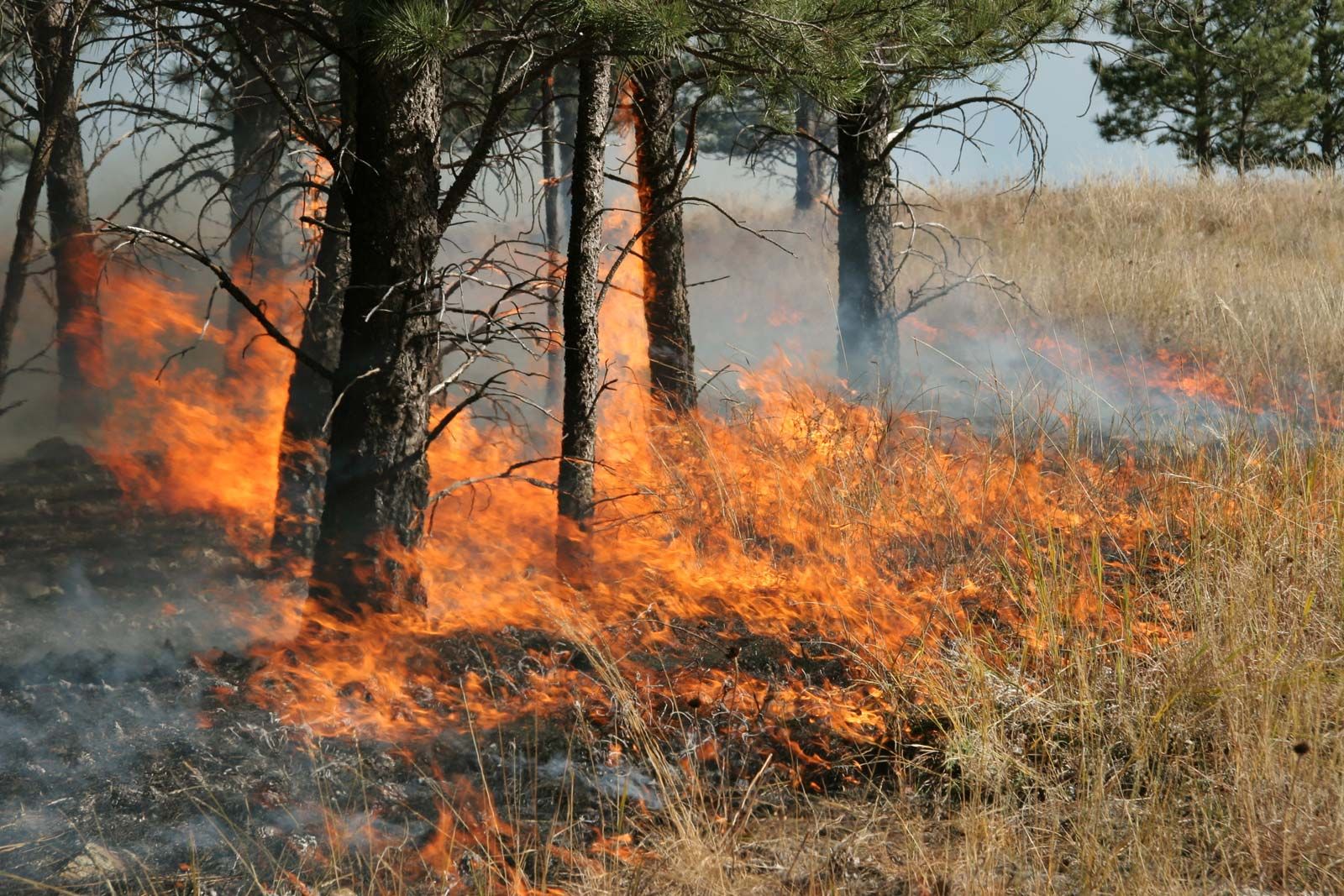
prescribed fire, form of land management in which fire is intentionally applied to vegetation. Prescribed fires are conducted under desired conditions to meet specific objectives, such as to restore fire regimes in adapted ecosystems or to limit the amount of dry brush in an area prone to wildfires. Two primary types of prescribed fire are used: broadcast burning, in which fire is applied across an area that can range in size from less than one hectare (2.5 acres) to tens of thousands of hectares, and pile burning, in which discrete piles of fuels are burned with limited or no spread between the piles. For either type, managers usually compose a detailed prescribed burn plan that clearly defines the suitable weather and fuel conditions, the desired fire behavior, and the effects needed to meet predetermined objectives.
Indigenous uses of prescribed fire
The use of prescribed fire by humans predates modern civilization in many areas worldwide. Indigenous peoples have long used prescribed fire as an essential tool to manage wildlands for particular resources, such as desired plants and game species. Indeed, a number of Indigenous peoples, including various North American Native peoples and Australian Aborigines, use fire to create favorable conditions for a variety of plants used for food, basketry materials, and clothing. Prescribed fire has also been used to decrease the presence and abundance of pest species that can degrade the quality and quantity of desirable plants, as well as to clear land for village sites and to improve access and travel.
Modern uses of prescribed fire
In modern use as a land management tool, prescribed fires are commonly used to reduce vegetation, thereby minimizing the risk of wildfires. In these instances, prescribed fire serves to decrease fuel loading (i.e., the mass of fuel in a given area) and limit fire behavior in areas that might otherwise burn hotter during dry weather conditions that often accompany wildfires.



 " height="20" alt="HEW Logo">

Prescribed fire can also improve ecosystem health in forests, woodlands, shrublands, and grasslands by reducing competition, decreasing diseases and pests, and decreasing the fire intensity during wildfires. In many regions that historically experienced wildfires, such as the tallgrass prairies of the Midwestern United States and the fynbos of South Africa, years of fire exclusion and suppression in the 19th and 20th centuries allowed fuels to accumulate, altering the vegetation communities present. Prescribed fire can be used to restore those ecosystems and promote the historical conditions present prior to the removal of wildfire. Additionally, many ecosystems are specifically fire-adapted—the species of plants and animals native to the ecosystems are enhanced by or dependent on the occurrence of fire to persist and reproduce. The use of prescribed fire in those systems can improve ecological conditions, especially in areas that have been fire-suppressed by humans, and often serves to promote the conservation and preservation of those lands.
(Read Britannica’s list “Playing with Wildfire: 5 Amazing Adaptations of Pyrophytic Plants.”)
Prescribed fire is also commonly used for range management. The periodic burning of rangelands can increase the productivity and quality of forage plants for livestock such as cattle, elk, and bison.
While generally beneficial to fire-prone areas, prescribed fires can have negative impacts on natural resources or pose some risks to local communities. For instance, if prescribed fires are implemented early in the growing season, ground-nesting birds may suffer a loss of nests or eggs. Additionally, implementing prescribed burns has a small risk of escape that could result in property damage.
The trusted destination for professionals, college students, and lifelong learners.
SUBSCRIBE


Considerations for conducting prescribed burns
Prescribed fire practitioners must consider multiple factors in order to successfully implement burns. One of the main considerations is the desired fire behavior—how the fire should burn to achieve the desired outcome—which generally is influenced by fuel type, weather conditions, and topography. Areas differ in the amount, type, arrangement, and combustibility of the fuels present, depending on factors such as the type of ecosystem, the season, and the amount of time since the last burn. Weather conditions, such as precipitation, temperature, relative humidity, and wind, have a strong influence on prescribed fire behavior, with dry, hot, windy conditions being the least conducive to safe burns. The primary topographic consideration for prescribed fire behavior is the slope of the terrain; fire spreads up or down a hill very differently than across flat ground. The direction and speed of a fire can be controlled based on the application of fire with respect to the direction of the wind or slope. Fires that burn with the prevailing wind or slope are called head fires and have the highest intensity and rate of spread, whereas fires that burn against the wind or slope are called backing fires and have the lowest intensity and rate of spread. Fires moving perpendicular to the wind or slope are called flanking fires and have intermediate intensity and rate of spread.

Managers can also control the resultant fire behavior with variation in the ignition pattern. Ignition devices come in many forms, such as drip torches or fusees (ignition devices similar to emergency flares), and are used to apply fire to an area, generally in patterns of strips or spots, or in a ring around the entire boundary. Selection of ignition pattern depends on the terrain, desired fire behavior, and management objectives. Strip ignition is the application of fire in linear strips within a given area that can vary in number and spacing, depending on the desired fire behavior. Spot ignition refers to the application of fire in an area through a series of small spots. Strip fires are most commonly employed because the fire can be controlled by varying the number of strips ignited and the distance between strips.
Other major considerations of prescribed fire are immediate and long-term changes that result from the fire, known as the fire effects. Typically, the fire effects most important to managers are the amount and pattern of the fuels burned, the amount and composition of the smoke produced, and the vegetation response. Smoke composition is important to managers because its constituents, such as particulate matter, carbon dioxide, and ammonium, have different impacts on air quality and human health. Plant responses to fire vary widely depending on the plant ecology and the fire behavior; the ways in which plants respond can result in changes in both the species present and their relative abundance.
Since the effectiveness of a prescribed fire decreases with time owing to fuel buildup and vegetation regrowth, practitioners must determine when to reburn the area to maintain desired conditions. Typically, the number of years between prescribed fires is determined by the amount of fuel that accumulates per year or the historic fire return interval of a given area. Intervals between fires vary widely and can range from 1 to 50 years, depending on the vegetation type, climate, and topography.