
- In full:
- polyvinyl chloride


PVC
-
What is PVC?
PVC (polyvinyl chloride) is a synthetic resin created through the polymerization of vinyl chloride. It stands as the second-most produced and consumed plastic after polyethylene.
PVC is a rigid plastic in its pure form but can be made flexible through plasticizers. It is produced through bulk, solution, suspension, and emulsion polymerization of vinyl chloride monomer, using free-radical initiators. Its chemical formula is CH₂=CHCl.
Uses for PVC range from pipes and conduits to raincoats and shower curtains. It was first created in 1872 by Eugen Baumann, but its commercial use was limited until Waldo Lonsbury Semon created plasticized PVC in 1926.
3 Britannica SourcesCreated from Britannica articles using AI. AI can make mistakes, so verify using Britannica articles. -
What does 'PVC' stand for in chemistry?
PVC stands for polyvinyl chloride. It is a synthetic resin produced through the polymerization of vinyl chloride. PVC is second only to polyethylene in production and consumption among plastics. Its versatility allows for a wide array of applications, such as raincoats, shower curtains, pipes, and indoor plumbing.
The chemical formula for vinyl chloride is CH₂=CHCl. PVC can be manufactured through bulk, solution, suspension, and emulsion polymerization of vinyl chloride monomer, using free-radical initiators.
3 Britannica SourcesCreated from Britannica articles using AI. AI can make mistakes, so verify using Britannica articles. -
How is PVC made?
PVC (polyvinyl chloride) is a synthetic resin created through the polymerization of vinyl chloride. This process involves using free-radical initiators to open the double bond in vinyl chloride monomers (CH₂=CHCl), linking thousands of these monomers to form repeating units of polymers.
Vinyl chloride is typically obtained by reacting ethylene with oxygen and hydrogen chloride, using a copper catalyst. The resulting PVC can be rigid or flexible, depending on the addition of plasticizers.
3 Britannica SourcesCreated from Britannica articles using AI. AI can make mistakes, so verify using Britannica articles. -
What are the main uses of PVC?
Polyvinyl chloride (PVC) is a synthetic resin made by polymerizing vinyl chloride and ranks second to polyethylene in plastic production and consumption.
PVC is a rigid plastic valued for its strength, flame resistance, and use in construction for pipes, conduits, siding, and frames. With the addition of plasticizers, PVC becomes flexible and appears in floor tiles, garden hoses, and shower curtains. PVC can also be made into plastisols, fluids that can be cast into molds or spread on fabric and then solidified through heating for making gloves and overshoes.
4 Britannica SourcesCreated from Britannica articles using AI. AI can make mistakes, so verify using Britannica articles. -
What are some advantages and disadvantages of using PVC?
PVC (polyvinyl chloride) is a synthetic resin employed across a wide array of domestic and industrial products.
Advantages:
* Lightweight and rigid, PVC is strong and flame-resistant, making it useful in pipes, conduits, siding, window frames, and door frames.
* Flexible when plasticized, it can be used for floor tiles, garden hoses, and shower curtains.
* It can be recycled into products like drainage pipes and traffic cones.Disadvantages:
* The vinyl chloride monomer used to make PVC is a toxic and carcinogenic gas that must be handled carefully.
* Pure PVC must be processed above 100 °C, which can cause decomposition and release hydrogen chloride (HCl). Stabilizers like cadmium, zinc, tin, or lead are needed to prevent this.
* Environmental concerns exist regarding the potential ill effects of substances like residual vinyl chloride monomer, hydrogen chloride, organometallic stabilizers, and phthalate plasticizers.3 Britannica SourcesCreated from Britannica articles using AI. AI can make mistakes, so verify using Britannica articles. -
How does the recycling of PVC work and why is it important?
PVC recycling involves melting down PVC waste and converting it into new products. PVC products like bottles can be recycled into items such as traffic cones and drainage pipes.
Recycling PVC and other plastics helps reduce landfill waste and encourages the reuse of materials. However, recycling PVC can be complex due to contamination from non-plastics or different polymers. Mixing different colors and quality control also pose challenges, as recycled plastics often have disadvantages compared to unrecycled ones.
2 Britannica SourcesCreated from Britannica articles using AI. AI can make mistakes, so verify using Britannica articles.
PVC, a synthetic resin made from the polymerization of vinyl chloride. Second only to polyethylene among the plastics in production and consumption, PVC is used in an enormous range of domestic and industrial products, from raincoats and shower curtains to window frames and indoor plumbing. A lightweight, rigid plastic in its pure form, it is also manufactured in a flexible “plasticized” form.
Vinyl chloride (CH2=CHCl), also known as chloroethylene, is most often obtained by reacting ethylene with oxygen and hydrogen chloride over a copper catalyst. It is a toxic and carcinogenic gas that is handled under special protective procedures. PVC is made by subjecting vinyl chloride to highly reactive compounds known as free-radical initiators. Under the action of the initiators, the double bond in the vinyl chloride monomers (single-unit molecules) is opened, and one of the resultant single bonds is used to link together thousands of vinyl chloride monomers to form the repeating units of polymers (large, multiple-unit molecules). The chemical structure of the vinyl chloride repeating units is: 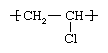
PVC was prepared by the French chemist Henri Victor Regnault in 1835 and then by the German chemist Eugen Baumann in 1872, but it was not patented until 1912, when another German chemist, Friedrich Heinrich August Klatte, used sunlight to initiate the polymerization of vinyl chloride. Commercial application of the plastic was at first limited by its extreme rigidity; however, in 1926, while trying to dehydrohalogenate PVC in a high-boiling solvent in order to obtain an unsaturated polymer that might bond rubber to metal, Waldo Lunsbury Semon, working for the B.F. Goodrich Company in the United States, produced what is now called plasticized PVC. The discovery of this flexible, inert product was responsible for the commercial success of the polymer. Under the trademark Koroseal, Goodrich made the plastic into shock-absorber seals, electric-wire insulation, and coated cloth products. One of the best-known applications of the plastic was initiated in 1930, when the Union Carbide and Carbon Corporation (later the Union Carbide Corporation) introduced Vinylite, a copolymer of vinyl chloride and vinyl acetate that became the standard material of long-playing phonograph records.



 " height="20" alt="HEW Logo">
Pure PVC finds application in the construction trades, where its rigidity, strength, and flame resistance are useful in pipes, conduits, siding, window frames, and door frames. It is also blow-molded into clear, transparent bottles. Because of its rigidity, it must be extruded or molded above 100 °C (212 °F)—a temperature high enough to initiate chemical decomposition (in particular, the emission of hydrogen chloride [HCl]). Decomposition can be reduced by the addition of stabilizers, which are mainly compounds of metals such as cadmium, zinc, tin, or lead.
In order to arrive at a product that remains flexible, especially at low temperatures, most PVC is heated and mixed with plasticizers, which are sometimes added in concentrations as high as 50 percent. The most commonly used plasticizer is the compound di-2-ethylhexyl phthalate (DEHP), also known as dioctyl phthalate (DOP). Plasticized PVC is familiar to consumers as floor tile, garden hose, imitation leather upholstery, and shower curtains.
Very fine particles of PVC can be dispersed in plasticizer in excess of the amount used to make plasticized PVC (e.g., 50 percent or more), and this suspension can be heated until the polymer particles dissolve. The resultant fluid, called a plastisol, will remain liquid even after cooling but will solidify into a gel upon reheating. Plastisols can be made into products by being spread on fabric or cast into molds. Flexible gloves can be made by dipping a hand-shaped form into plastisol, and hollow objects such as overshoes can be made by casting plastisol into a mold, pouring off the excess, and solidifying the material remaining on the walls of the mold.
PVC has been an occasional object of controversy since a link between vinyl chloride monomer and cancer was established in 1973. Environmentalists and health advocates raised concerns over the possible ill effects of exposure to substances such as residual vinyl chloride monomer, hydrogen chloride, organometallic stabilizers, and phthalate plasticizers. Industry officials maintain that these substances are scrupulously controlled and are released from PVC in trace amounts that have not been proved harmful.
The trusted destination for professionals, college students, and lifelong learners.
SUBSCRIBE


Rigid PVC is typically made into durable structural products such as window casings and home siding, which are not frequently recycled. PVC bottles and containers, however, can be recycled into products such as drainage pipe and traffic cones. The recycling code number of PVC is #3.