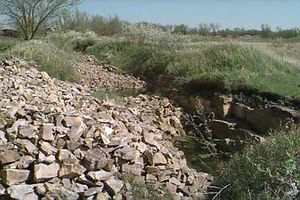
pipestone
Quick Summary
Pipestone, also known as catlinite, is a soft, red argillaceous stone primarily used by Indigenous peoples of the Great Plains to create ceremonial tobacco pipes. The Pipestone National Monument in southwestern Minnesota was established in 1937 to protect these historically significant quarries.12
According to Native American legend, the stone and people were created from the same material, emphasizing its sacred use for religious and ceremonial purposes. The quarries are located between layers of hard quartzite, requiring excavation to reach the pipestone veins. Historically, many tribes utilized these quarries, with the Sioux gaining control by 1700. The artist George Catlin visited in 1836, documenting and collecting samples of the stone, which was later named in his honor. Today, only Native Americans are permitted to quarry the pipestone.23
Ask Britannica AI about this topic
Britannica doesn't have a full article on this topic, so we've curated a list of our relevant coverage.