


pancreatic duct
Quick Summary
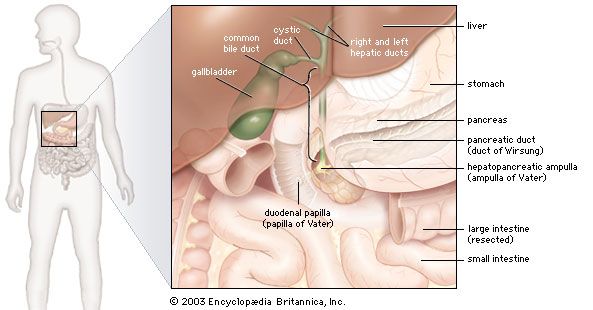
The pancreatic duct is a tube that leads from the pancreas and opens into the duodenum, which is the first part of the small intestine. The pancreas itself is a gland located behind the stomach. It has two main functions: an exocrine function, producing digestive enzymes, and an endocrine function, producing hormones like insulin and glucagon.12
The exocrine tissue of the pancreas, called acinar tissue, creates digestive enzyme precursors. These are transported through smaller ducts that eventually merge into the main pancreatic duct, also known as the duct of Wirsung. In most cases, this main pancreatic duct joins the common bile duct before entering the duodenum at a point called the hepatopancreatic ampulla, or ampulla of Vater. Diseases of the pancreas or bile duct can sometimes obstruct the duodenum.234
Ask Britannica AI about this topic
Britannica doesn't have a full article on this topic, so we've curated a list of our relevant coverage.