

otolithic membrane
Quick Summary

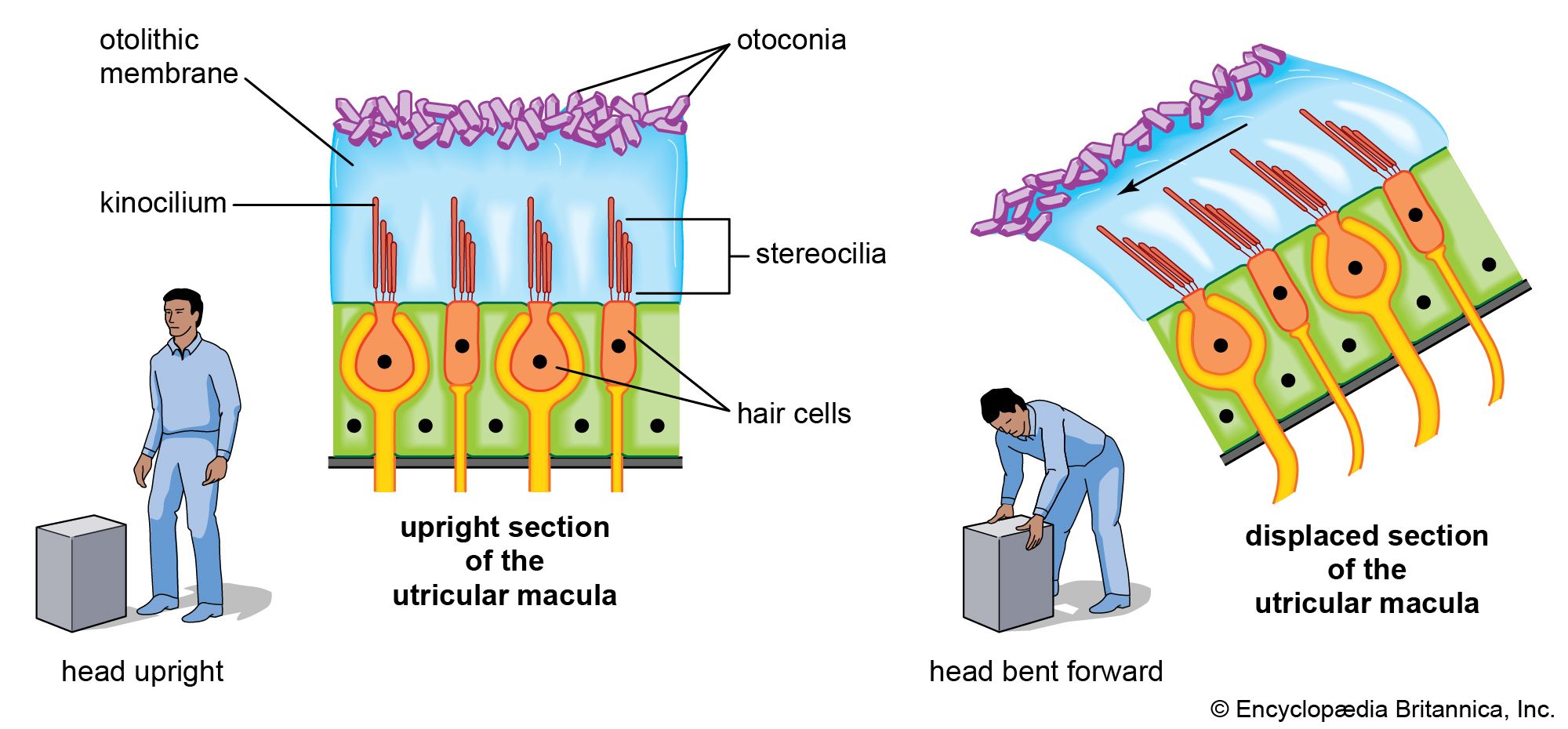
The otolithic membrane is a crucial component of the vestibular system in the inner ear, primarily responsible for detecting linear acceleration and maintaining balance. This delicate, gelatinous structure covers the macula, a patch of sensory cells within the utricle and saccule of the vestibule.123
The otolithic membrane is studded with tiny calcium carbonate crystals called otoconia. These crystals add significant weight to the membrane. When the head tilts or moves linearly, gravity causes the heavier otolithic membrane to shift, stimulating the hair cells beneath it. This stimulation generates nerve impulses that are sent to the brainstem via the vestibulocochlear nerve, providing information about the head's position and movement relative to gravity.123
Ask Britannica AI about this topic
Britannica doesn't have a full article on this topic, so we've curated a list of our relevant coverage.
 human earVestibule
…a delicate acellular structure, the otolithic, or statolithic, membrane. This membrane is sometimes described as gelatinous, although it has a fibrillar pattern. The surface of the membrane is covered by a blanket of rhombohedral crystals, referred to as otoconia or statoconia, which consist of calcium carbonate in the form of…
Read More…a delicate acellular structure, the otolithic, or statolithic, membrane. This membrane is sometimes described as gelatinous, although it has a fibrillar pattern. The surface of the membrane is covered by a blanket of rhombohedral crystals, referred to as otoconia or statoconia, which consist of calcium carbonate in the form of…
Read More- vestibular systemVestibular structures
…a delicate acellular structure, the otolithic, or statolithic, membrane. This membrane is sometimes described as gelatinous, although it has a fibrillar pattern. The surface of the membrane is covered by a blanket of rhombohedral crystals, referred to as otoconia or statoconia, which consist of calcium carbonate in the form of…
Read More…a delicate acellular structure, the otolithic, or statolithic, membrane. This membrane is sometimes described as gelatinous, although it has a fibrillar pattern. The surface of the membrane is covered by a blanket of rhombohedral crystals, referred to as otoconia or statoconia, which consist of calcium carbonate in the form of…
Read More
 sensesMechanical senses
…gelatinous mass known as the otolithic membrane, which contains small stonelike calcium carbonate particles called otoconia. The otolithic membrane and otoconia bend the hairs in the direction of gravity, providing the animal with a vertical reference direction; similar organs of balance, known as statocysts, are common in invertebrates. Also in…
Read More…gelatinous mass known as the otolithic membrane, which contains small stonelike calcium carbonate particles called otoconia. The otolithic membrane and otoconia bend the hairs in the direction of gravity, providing the animal with a vertical reference direction; similar organs of balance, known as statocysts, are common in invertebrates. Also in…
Read More- human earDetection of linear acceleration: static equilibrium
…by shearing forces between the otolithic membrane and the cilia of the hair cells beneath it. The otolithic membrane is covered with a mass of minute crystals of calcite (otoconia), which add to the membrane’s weight and increase the shearing forces set up in response to a slight displacement when…
Read More…by shearing forces between the otolithic membrane and the cilia of the hair cells beneath it. The otolithic membrane is covered with a mass of minute crystals of calcite (otoconia), which add to the membrane’s weight and increase the shearing forces set up in response to a slight displacement when…
Read More