

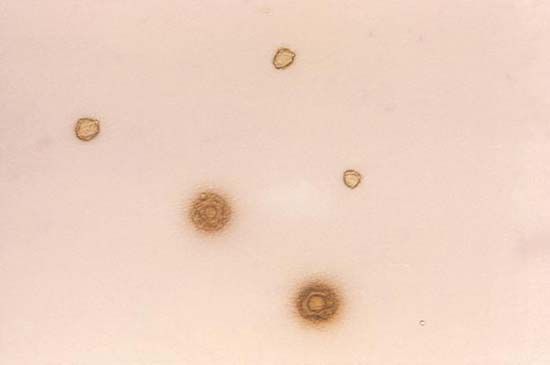
Mycoplasma
Mycoplasma, any bacterium in the genus Mycoplasma. The name mycoplasma has also been used to denote any species in the class mollicutes or any genus in the order Mycoplasmatales.
Mycoplasmas are among the smallest of bacterial organisms. The cell varies from a spherical or pear shape (0.3 to 0.8 micrometres [0.0000117 to 0.0000312 inch]) to that of a slender branched filament (up to 150 micrometres [0.00585 inch]). Mycoplasma species are mostly facultatively anaerobic, colonial microorganisms that lack cell walls. Mycoplasma species are parasites of joints and the mucous membranes lining the respiratory, genital, or digestive tracts of ruminants, carnivores, rodents, and humans. Toxic byproducts excreted by the bacterium accumulate in the host’s tissues, causing damage. M. pneumoniae causes a widespread but rarely fatal pneumonia in humans. Mycoplasma infection may also trigger a serious immune reaction in the host.



 " height="20" alt="HEW Logo">