

monosomy
Quick Summary
Monosomy is a genetic condition where an individual has one less chromosome than the typical diploid number. In humans, this means having 45 chromosomes instead of the usual 46. This occurs due to errors in cell division, specifically during meiosis, leading to an egg or sperm cell with a missing chromosome.123
While trisomy, the presence of an extra chromosome, can result in conditions like Down syndrome, monosomy of autosomes is typically lethal in utero and not observed in live births. Monosomy is a type of chromosomal disorder, which arises from abnormal chromosome number or structure.24
Ask Britannica AI about this topic
Britannica doesn't have a full article on this topic, so we've curated a list of our relevant coverage.
- chromosomal disorder
…duplicated (trisomy) or absent (monosomy); an entire set of 23 chromosome pairs can be duplicated three (triploidy) or more (polyploidy) times; or one arm or part of one arm of a single chromosome may be missing (deletion). Part of one chromosome may be transferred to another (translocation), which has…
Read More…duplicated (trisomy) or absent (monosomy); an entire set of 23 chromosome pairs can be duplicated three (triploidy) or more (polyploidy) times; or one arm or part of one arm of a single chromosome may be missing (deletion). Part of one chromosome may be transferred to another (translocation), which has…
Read More 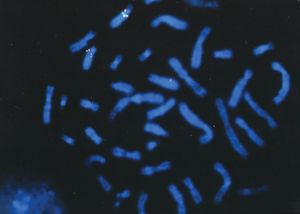 human genetic diseaseNumerical abnormalities
Similarly, monosomy for any of the autosomes is lethal in utero and therefore is not seen in the population. Because numerical chromosomal abnormalities generally result from independent meiotic events, parents who have one pregnancy with a numerical chromosomal abnormality are generally not at markedly increased risk…
Read MoreSimilarly, monosomy for any of the autosomes is lethal in utero and therefore is not seen in the population. Because numerical chromosomal abnormalities generally result from independent meiotic events, parents who have one pregnancy with a numerical chromosomal abnormality are generally not at markedly increased risk…
Read More