monochromacy
Quick Summary
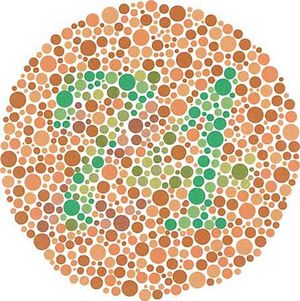
Monochromacy, also known as complete color blindness or achromatopsia, is an extremely rare condition where an individual cannot distinguish any colors, perceiving everything in shades of gray. This occurs when none or only one of the three types of cone cells in the retina, responsible for color vision, are functional.12
In normal color vision, known as trichromacy, all three cone types work correctly. In contrast, monochromacy means only one primary color is needed to match any color in the spectrum. This condition can sometimes be accompanied by reduced visual acuity. Monochromacy is distinct from dichromacy, where only two cone types function, and trichromacy, which involves three.12
Ask Britannica AI about this topic
Britannica doesn't have a full article on this topic, so we've curated a list of our relevant coverage.