metabolite
Quick Summary
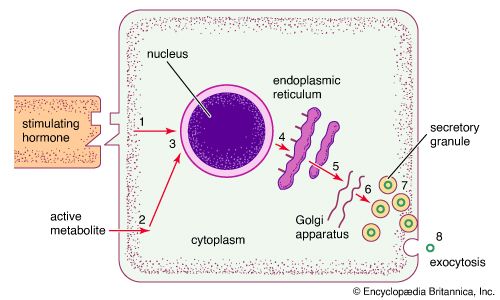
In biochemistry, a metabolite is a substance produced during metabolism. Metabolism encompasses all the chemical reactions within cells that provide energy for life processes and synthesize new organic material. These reactions involve the transformation of small molecules into metabolites, which are essential for an organism's health. Studying metabolites can reveal how changes in substances like blood glucose affect health, offering insights beyond DNA or protein analysis. Metabolomics, the study of metabolites, uses techniques like nuclear magnetic resonance (NMR) and mass spectrometry (MS) to analyze these chemical compounds.123
Ask Britannica AI about this topic
Britannica doesn't have a full article on this topic, so we've curated a list of our relevant coverage.