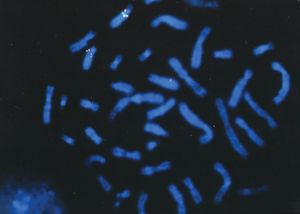
meiotic nondisjunction
Quick Summary
Meiotic nondisjunction is the failure of chromosomes or sister chromatids to separate properly during meiosis, a type of cell division that produces gametes (sex cells). This process normally results in four genetically distinct haploid cells, each with half the number of chromosomes of the original diploid cell.12
When nondisjunction occurs, it leads to daughter cells with an incorrect number of chromosomes. This can result in gametes with either too many or too few chromosomes. These numerical abnormalities in chromosomes are believed to generally stem from meiotic nondisjunction and can lead to genetic diseases. For example, Down syndrome is associated with trisomy 21, meaning an extra copy of chromosome 21 is present. Maternal age is a significant factor, with older women having a higher risk of conceiving a child with a chromosomal abnormality.3
Ask Britannica AI about this topic
Britannica doesn't have a full article on this topic, so we've curated a list of our relevant coverage.