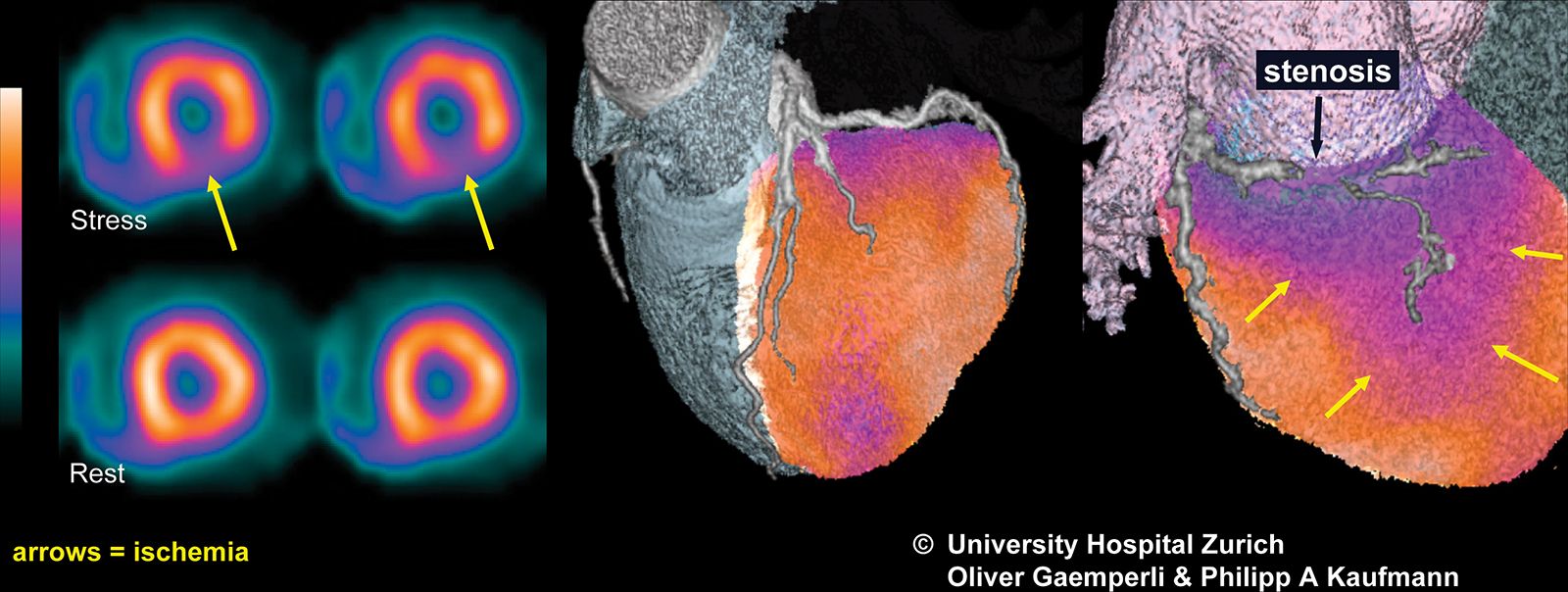


ischemia
Quick Summary

Ischemia is a condition characterized by a reduced supply of blood to an organ or part of the body, leading to a deficiency in oxygen and nutrients. This can cause damage to tissues and organs.
There are different types of ischemia:
* Ischemic stroke occurs when a blood vessel supplying the brain is narrowed or blocked, most commonly due to a blood clot.1
* Myocardial ischemia is a reduced blood supply to the heart muscle, which can be diagnosed using procedures like myocardial perfusion imaging.2
* Arteriolosclerosis can lead to ischemia by thickening the walls of small arteries, narrowing their passageways. This is often seen in individuals with diabetes or high blood pressure.3
When circulation is interrupted, it can disrupt nervous function, and if not restored quickly, can result in irreversible damage to neurons, creating an infarct.4
Ask Britannica AI about this topic
Britannica doesn't have a full article on this topic, so we've curated a list of our relevant coverage.