

iodine-131
Quick Summary
Iodine-131 (I-131) is a radioactive isotope of iodine with a half-life of eight days. It emits beta and gamma rays and is selectively accumulated by the thyroid gland. While not the most hazardous long-lived radioisotope due to its short half-life, excessive exposure to I-131 can lead to metabolic disturbances and an increased risk of thyroid cancer, particularly in children.123
I-131 is valuable in medicine for diagnostic and therapeutic purposes. It is used to monitor thyroid gland activity, treat goiter and thyroid cancer, and locate tumors in the brain and liver. It also serves as a tracer in physiological processes and in investigations of metabolic pathways.42
Ask Britannica AI about this topic
Britannica doesn't have a full article on this topic, so we've curated a list of our relevant coverage.
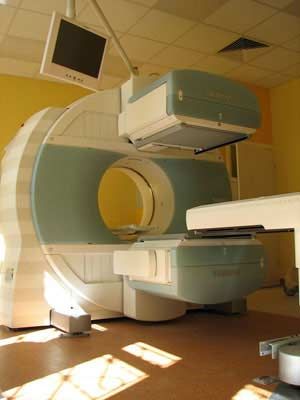 nuclear medicine
…in particular organs: for example, iodine-131 settles in the thyroid gland and can reveal a variety of defects in thyroid functioning. Another isotope, carbon-14, is useful in studying abnormalities of metabolism that underlie diabetes mellitus, gout, anemia, and acromegaly.
Read More…in particular organs: for example, iodine-131 settles in the thyroid gland and can reveal a variety of defects in thyroid functioning. Another isotope, carbon-14, is useful in studying abnormalities of metabolism that underlie diabetes mellitus, gout, anemia, and acromegaly.
Read More- radioactive isotope
Iodine-131 has proved effective in treating hyperthyroidism. Another medically important radioactive isotope is carbon-14, which is used in a breath test to detect the ulcer-causing bacteria Heliobacter pylori.
Read MoreIodine-131 has proved effective in treating hyperthyroidism. Another medically important radioactive isotope is carbon-14, which is used in a breath test to detect the ulcer-causing bacteria Heliobacter pylori.
Read More  radioactivityIn medicine
…radioisotopes are used as tracers, iodine-131, phosphorus-32, and technetium-99m are among the most important. Physicians employ iodine-131 to determine cardiac output, plasma volume, and fat metabolism and particularly to measure the activity of the thyroid gland where this isotope accumulates. Phosphorus-32 is useful in the identification of malignant tumours because…
Read More…radioisotopes are used as tracers, iodine-131, phosphorus-32, and technetium-99m are among the most important. Physicians employ iodine-131 to determine cardiac output, plasma volume, and fat metabolism and particularly to measure the activity of the thyroid gland where this isotope accumulates. Phosphorus-32 is useful in the identification of malignant tumours because…
Read More- radiationRadionuclides in diagnosis
…radionuclides suitable for metabolic studies, iodine-131 is one of the most widely used. This gamma-ray emitter has a half-life of eight days and concentrates in the thyroid gland, and so provides a measure of thyroid function.
Read More…radionuclides suitable for metabolic studies, iodine-131 is one of the most widely used. This gamma-ray emitter has a half-life of eight days and concentrates in the thyroid gland, and so provides a measure of thyroid function.
Read More