inner Helmholtz plane
Quick Summary
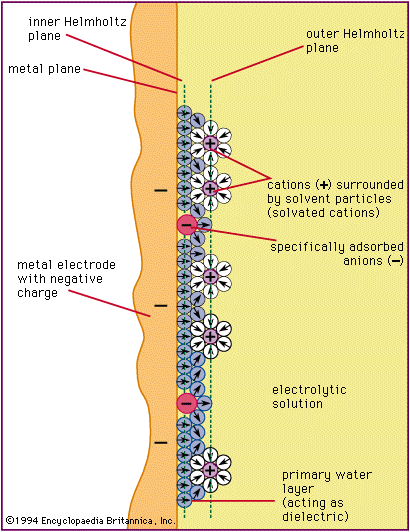
The inner Helmholtz plane is a concept in electrochemistry related to the electrical double layer. This double layer forms at the boundary between two substances, like an electrode and a solution, where charged particles accumulate.
Specifically, the inner Helmholtz plane represents the plane formed by the centers of ions that are specifically adsorbed onto the electrode's surface. These ions are attracted closer to the surface than other ions in the solution. This adsorption influences the electrical field across the interface, which is crucial for processes like the transfer of electrons in electrochemical cells and the rate of chemical reactions at electrodes. The structure of this interface is complex and studied using various experimental methods.
Ask Britannica AI about this topic
Britannica doesn't have a full article on this topic, so we've curated a list of our relevant coverage.