
hypaxial muscle
Quick Summary

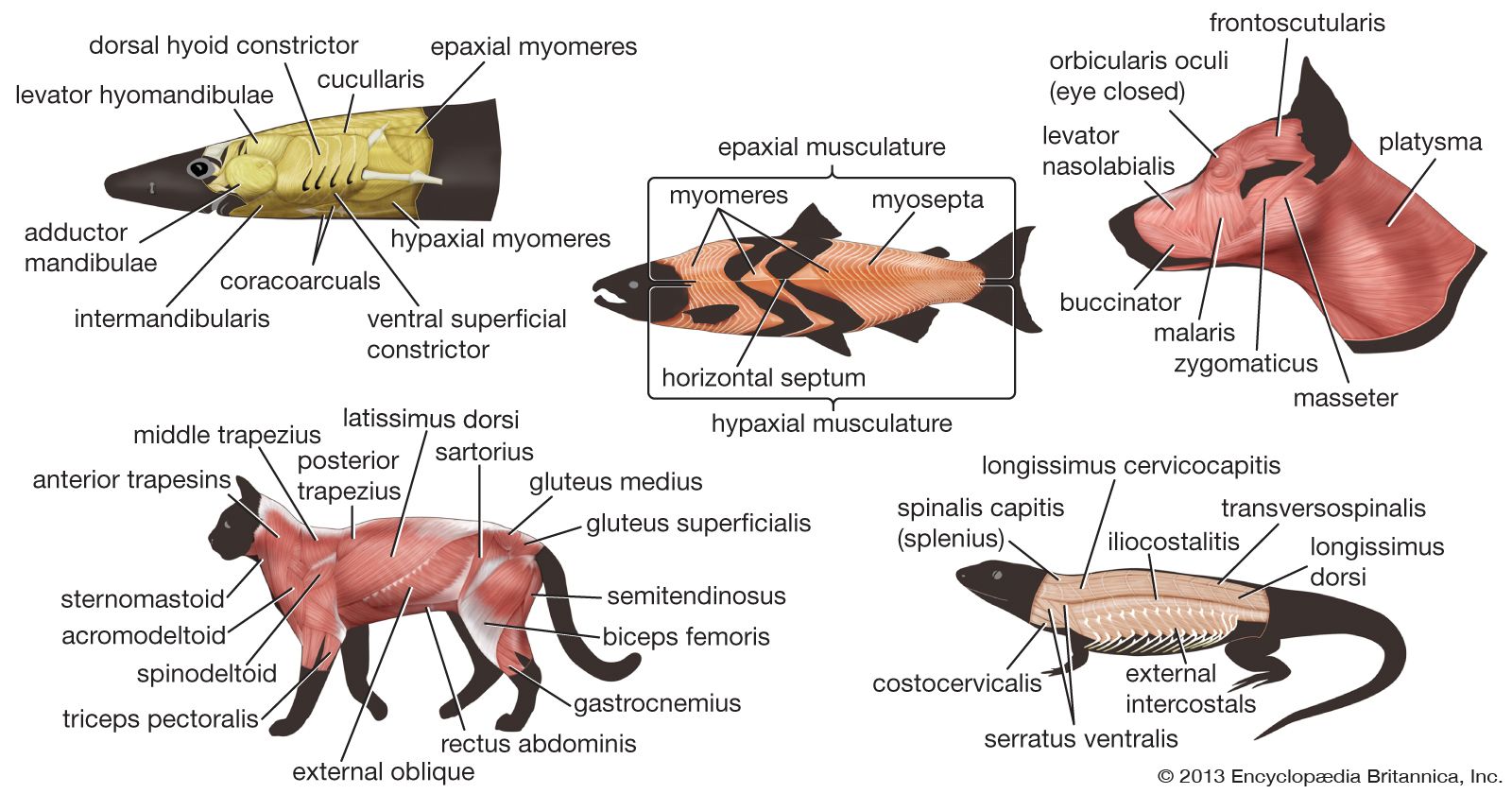
The hypaxial muscles are a group of muscles located ventral to the vertebrae. In tetrapods, these muscles are crucial for supporting the body's internal organs and enabling movement. They are organized into three main groups: subvertebral muscles, the rectus abdominis, and the lateral hypaxial muscles. The lateral group consists of the external oblique, internal oblique, and transversus muscles, with fibers oriented in different directions to strengthen the body wall.1
In higher tetrapods, these muscles become more complex. In the thoracic region, they form intercostal muscles between the ribs. The hypaxial musculature also contributes to the diaphragm, a key respiratory muscle in mammals, and forms muscular slings that support the pectoral girdle, allowing for limb movement. The innervation of these muscles is retained segmentally, even as their structure evolves.1
Ask Britannica AI about this topic
Britannica doesn't have a full article on this topic, so we've curated a list of our relevant coverage.