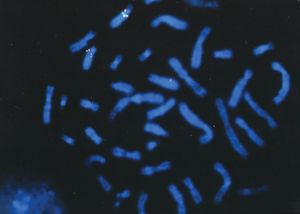
heteroplasmy
Quick Summary
Heteroplasmy refers to the presence of more than one type of mitochondrial DNA (mtDNA) within a cell or organism. Mitochondria are organelles responsible for generating most of a cell's supply of adenosine triphosphate (ATP), used as a source of chemical energy.12
Mitochondrial DNA is inherited maternally, meaning it comes from the mother's egg cell. In a cell with heteroplasmy, there can be a mix of normal and mutated mtDNA. The severity of any resulting mitochondrial disorder often depends on the proportion of normal versus mutated mtDNA. This condition is distinct from nuclear DNA inheritance, which follows Mendelian patterns.13
Ask Britannica AI about this topic
Britannica doesn't have a full article on this topic, so we've curated a list of our relevant coverage.