
genetic distance
Quick Summary

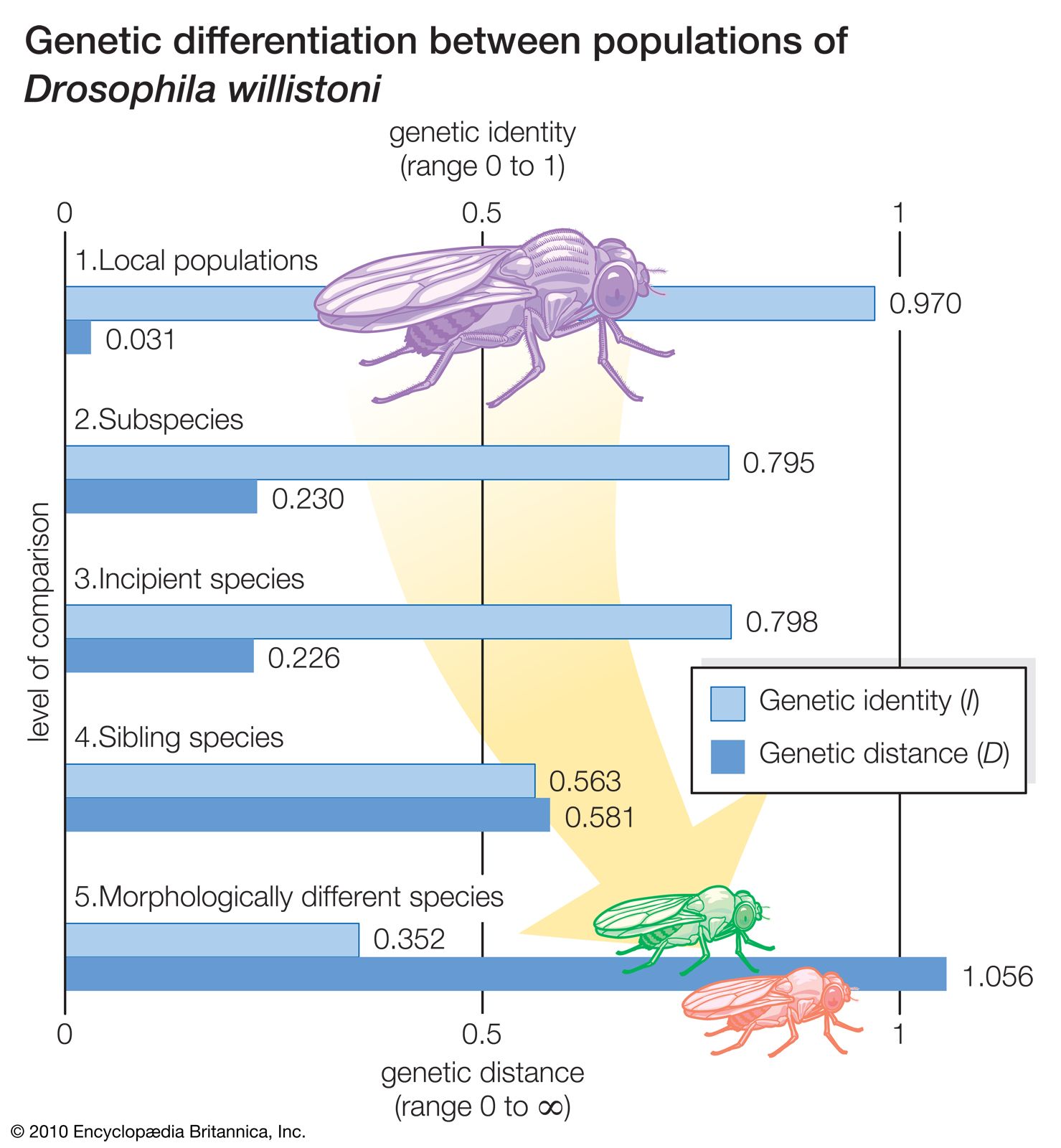
Genetic distance (D) is a measure used in evolutionary biology to quantify the proportion of gene changes that have occurred in the separate evolution of two populations. It ranges from zero to infinity, with higher values indicating greater divergence. Genetic identity (I) is a related parameter estimating the proportion of genes that are identical between two populations, ranging from 0 to 1.1
These measures are crucial for understanding speciation, the process by which new species develop. By comparing genes of different species, scientists can determine if speciation involves minor or major genetic alterations. For example, studies on fruit flies (Drosophila) have shown substantial genetic change during the first stage of speciation, with relatively fewer additional changes needed in the second stage. This concept is also applied in phylogenetics to estimate evolutionary relatedness by measuring nucleotide or amino acid substitutions between homologous DNA or protein sequences.12
Ask Britannica AI about this topic
Britannica doesn't have a full article on this topic, so we've curated a list of our relevant coverage.