fatty acid mobilization
Quick Summary
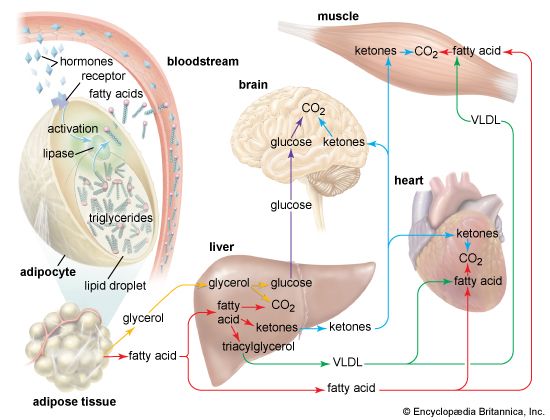
Fatty acid mobilization is the process by which stored fats in adipose tissue are released to provide energy for the body. This occurs when hormones like glucagon and adrenaline increase, signaling adipose cells to activate lipases. These enzymes break down triglycerides into free fatty acids, which then enter the circulatory system.1
These fatty acids are transported, bound to serum albumin, to tissues like skeletal and heart muscle, as well as the liver. In muscle, they are oxidized to produce energy. The liver also utilizes these fatty acids, partly converting them back into triglycerides for transport or into ketone molecules for energy in peripheral tissues. Fatty acid oxidation is crucial during prolonged starvation for energy production, especially for the brain, and defects in this process can lead to serious metabolic disorders.12
Ask Britannica AI about this topic
Britannica doesn't have a full article on this topic, so we've curated a list of our relevant coverage.