



facial expression
Quick Summary
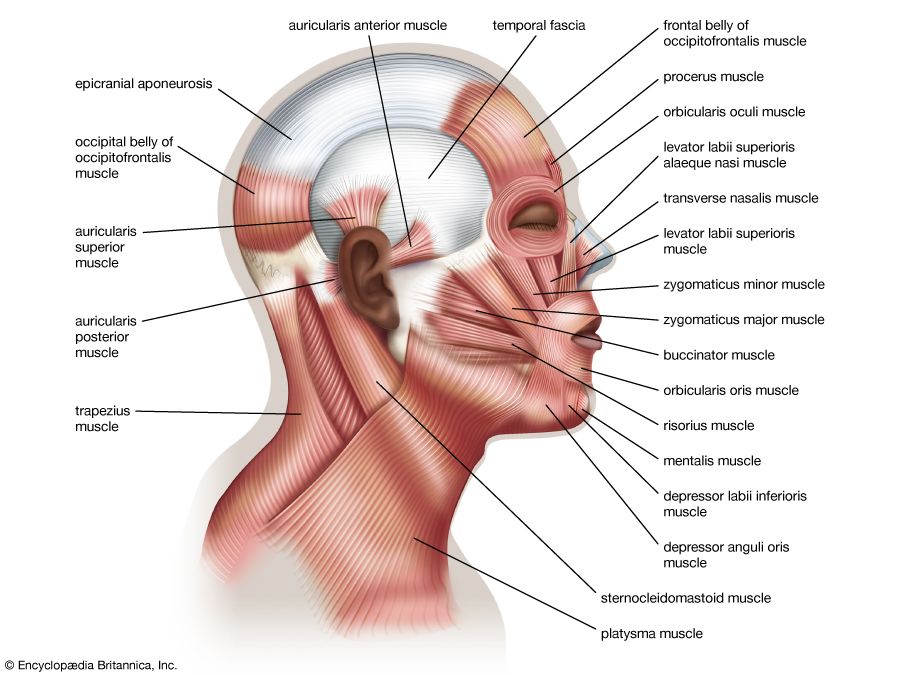
In psychology, facial expressions are a key component of how emotions are physically expressed. While some gestures and body language can vary significantly across cultures, research suggests that certain facial expressions are universal.1
Studies, notably by Paul Ekman, have indicated that basic emotions like anger, disgust, fear, joy, sadness, and surprise are recognized through consistent facial expressions across different cultures. These expressions are thought to be part of an "affect program" involving characteristic facial movements, vocalizations, and physiological responses. For instance, a genuine smile, known as a Duchenne smile, involves specific muscle contractions around the eyes, distinguishing it from a false smile. Eyebrows also play a role in nonverbal communication, helping to convey a range of emotions such as surprise or anger through their movement.213
Ask Britannica AI about this topic
Britannica doesn't have a full article on this topic, so we've curated a list of our relevant coverage.
 emotionThe variety and complexity of emotions
…physical accompaniments, such as a facial expression, or it may be invisible to observers. An emotion may involve conscious experience and reflection, as when one “wallows” in it, or it may pass virtually unnoticed and unacknowledged by the subject. An emotion may be profound, in the sense that it is…
Read More…physical accompaniments, such as a facial expression, or it may be invisible to observers. An emotion may involve conscious experience and reflection, as when one “wallows” in it, or it may pass virtually unnoticed and unacknowledged by the subject. An emotion may be profound, in the sense that it is…
Read More- emotionThe physical expression of emotion
…and an anthropological thesis that facial expressions of emotion, such as those of anger, surprise, and fear, are universal in human beings. In the 1960s the American psychologist Paul Ekman set out to disprove Darwin’s anthropological thesis but found, to his initial consternation, that it was confirmed by mounting cross-cultural…
Read More…and an anthropological thesis that facial expressions of emotion, such as those of anger, surprise, and fear, are universal in human beings. In the 1960s the American psychologist Paul Ekman set out to disprove Darwin’s anthropological thesis but found, to his initial consternation, that it was confirmed by mounting cross-cultural…
Read More - emotionThe physical expression of emotion
…“affect program”—a complex set of facial expressions, vocalizations, and autonomic and skeletal responses. It is still a matter of debate whether emotions that are supposedly basic can be captured in terms of affect programs; thus, it is also controversial whether the recognition and production of typical facial expressions are indeed…
Read More…“affect program”—a complex set of facial expressions, vocalizations, and autonomic and skeletal responses. It is still a matter of debate whether emotions that are supposedly basic can be captured in terms of affect programs; thus, it is also controversial whether the recognition and production of typical facial expressions are indeed…
Read More - emotionSocial structures of emotion
…the ubiquity and uniformity of facial expressions of emotion would be hard to fathom if it were not for the fact that they communicate an individual’s emotions to other members of his group or species. By smiling one indicates friendliness and perhaps lack of intent to cause harm; by frowning…
Read More…the ubiquity and uniformity of facial expressions of emotion would be hard to fathom if it were not for the fact that they communicate an individual’s emotions to other members of his group or species. By smiling one indicates friendliness and perhaps lack of intent to cause harm; by frowning…
Read More
