endocrine cell
Quick Summary
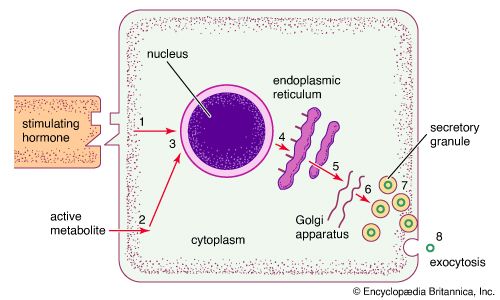
Endocrine cells are specialized cells that synthesize and secrete hormones, which are chemical messengers that regulate various bodily functions. These cells are organized into endocrine glands, such as the pituitary gland, adrenal glands, and pancreas. Some endocrine glands are distinct organs with defined borders, while others, like the islets of Langerhans in the pancreas, are microscopic clusters of cells embedded within other tissues.1
These cells play a crucial role in the endocrine system, a network of glands that work together to maintain homeostasis. The function of endocrine cells is essential for processes ranging from metabolism and growth to reproduction and stress response.1
Ask Britannica AI about this topic
Britannica doesn't have a full article on this topic, so we've curated a list of our relevant coverage.