
drag coefficient
Quick Summary

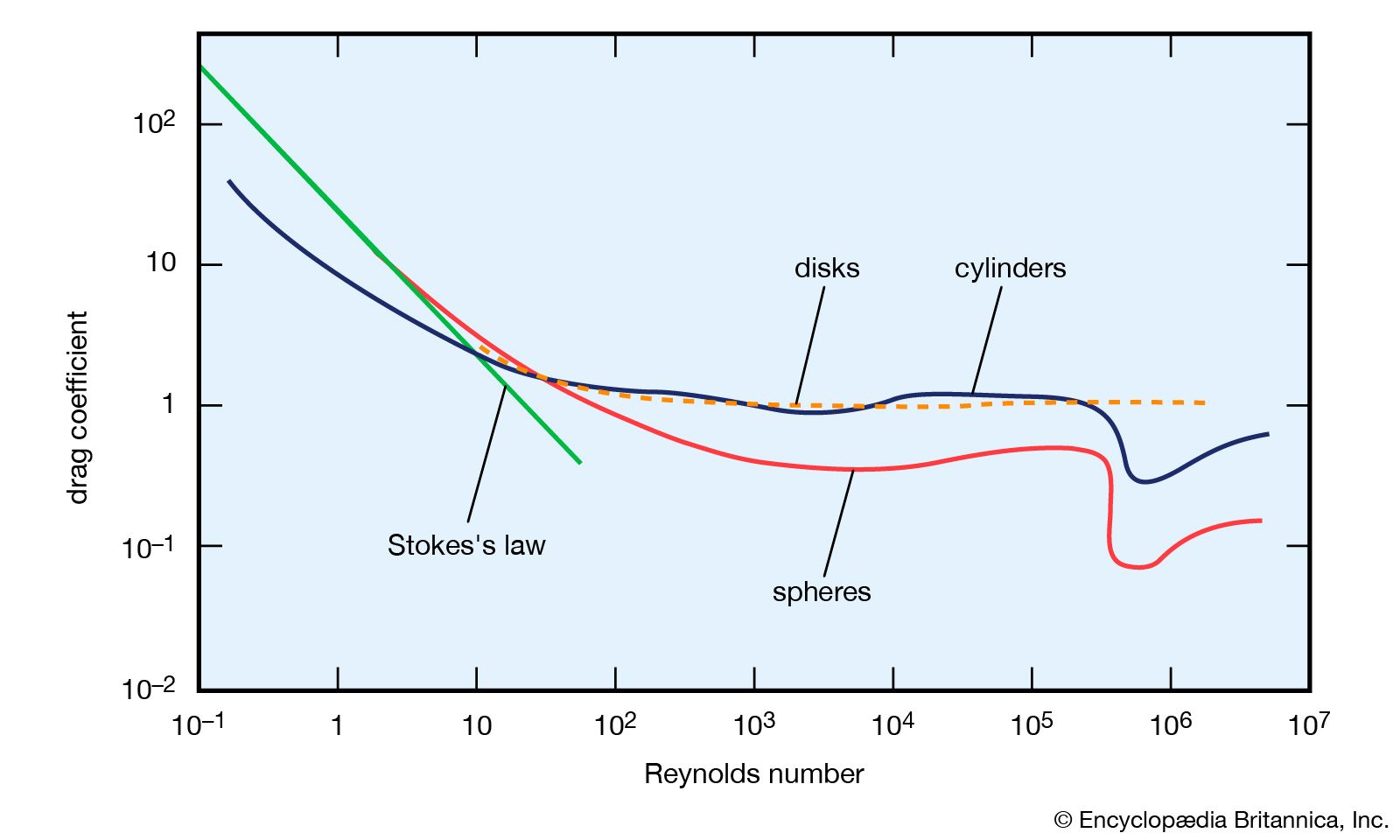
The drag coefficient is a factor used in fluid mechanics to represent the drag force acting on an object moving through a fluid. This force is exerted by the fluid stream on any obstacle in its path, or by an object moving through a stationary fluid. The drag coefficient is a dimensionless quantity, defined as the ratio of the drag force to the product of fluid density, velocity squared, and a reference area.123
Engineers use the drag coefficient to predict drag forces and to design vehicles, bridges, and other structures to minimize resistance. The value of the drag coefficient depends on factors such as the object's shape, the fluid's properties, and the flow conditions, often characterized by the Reynolds number.23
Ask Britannica AI about this topic
Britannica doesn't have a full article on this topic, so we've curated a list of our relevant coverage.