

divergence
Quick Summary
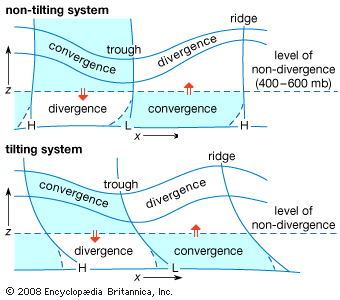
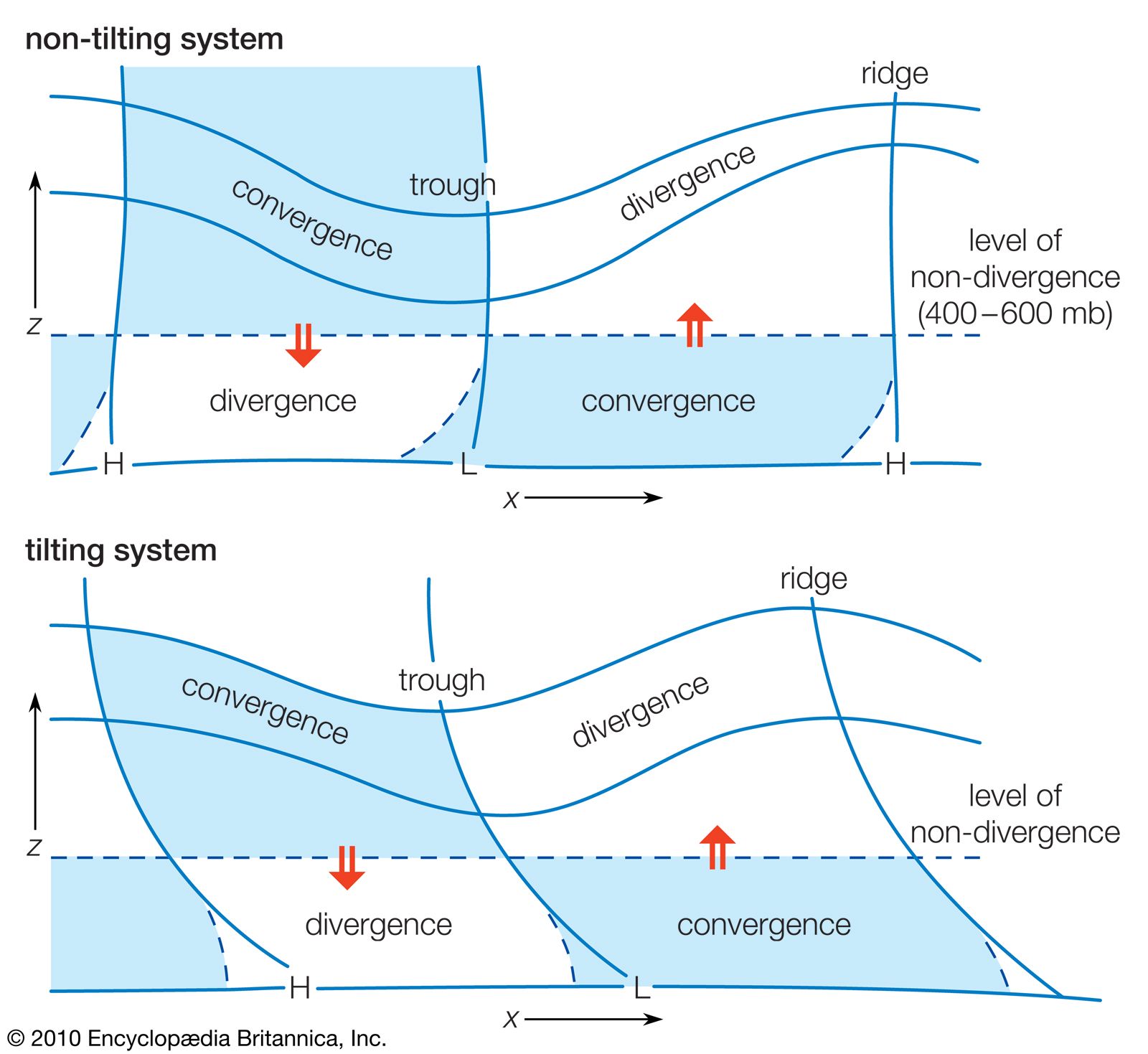
In meteorology, divergence refers to the horizontal outflow of air. This outflow causes air to move downward, a process known as subsidence. This is in contrast to convergence, which is the horizontal inflow of air that causes it to rise.1
Divergence aloft can lead to low atmospheric pressure at the surface in tropical regions. Conversely, the convergence of air in the upper troposphere can create high-pressure systems. Updrafts and downdrafts, which are vertical air currents, are also related to these processes. Updrafts are upward-moving currents, while downdrafts are downward-moving currents. These vertical movements are crucial in weather phenomena like thunderstorms.23
Ask Britannica AI about this topic
Britannica doesn't have a full article on this topic, so we've curated a list of our relevant coverage.