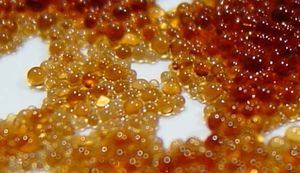
cation-exchange resin
Quick Summary
A cation-exchange resin is a type of ion-exchange resin that contains acidic groups. These acidic groups allow the resin to attract and exchange positively charged ions, known as cations, from a surrounding solution.12
These resins are typically made from polymerized organic compounds, often a styrene-divinylbenzene copolymer, with electrically charged groups like sulfonic or carboxylic acid salts. They are usually prepared as granules or beads and absorb solutions, causing them to swell.2
Cation-exchange resins are used in various applications, including water softening to remove calcium and magnesium ions, purification of sugar, and recovery of valuable elements like uranium from ores. They can also act as catalysts in certain chemical reactions.23
Ask Britannica AI about this topic
Britannica doesn't have a full article on this topic, so we've curated a list of our relevant coverage.