
- Also called:
- slaked lime or hydrated lime
- Related Topics:
- hydroxide

calcium hydroxide
-
What is calcium hydroxide?
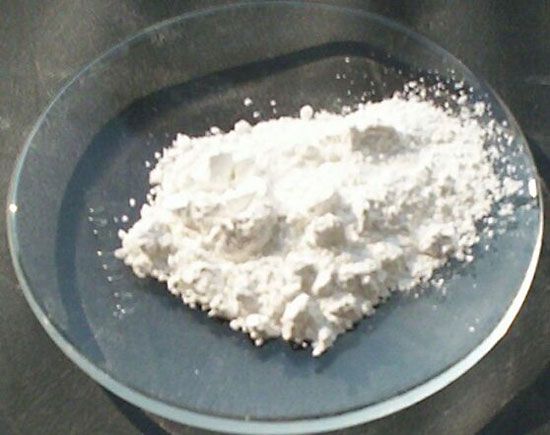
Calcium hydroxide (Ca(OH)(_2)) is a soft, white powder widely used in the chemical industry. It's created when calcium oxide mixes with water, resulting in a compound with two hydroxide ions (OH⁻) for each calcium ion (Ca²⁺).
Calcium hydroxide is typically produced by reacting calcium oxide (CaO) with water (H₂O). This reaction releases a significant amount of heat. It is also created when water is added to dry portland cement to make concrete.
In construction, calcium hydroxide is a key component of mortar, plaster, and cement. It is also a neutralizing agent that reacts with acids.
Calcium hydroxide is soluble in glycerol and acids but only slightly soluble in water. It has a molar mass of 74.09 grams per mole, a melting point of 580 °C (1,076 °F), and a density of 2.24 grams per cubic centimetre.
2 Britannica SourcesCreated from Britannica articles using AI. AI can make mistakes, so verify using Britannica articles. -
What are the main physical properties of calcium hydroxide?
Calcium hydroxide ((\text{Ca(OH)}_2)), also known as slaked lime, is a soft, white powder that is widely used in the chemical industry. It is formed when calcium oxide is mixed with water.
Here are its key physical properties:
- Molar mass 74.09 grams per mole
- Melting point 580 °C (1,076 °F)
- Density 2.24 grams per cubic centimetre
- Solubility Soluble in glycerol and acids, but only slightly soluble in water. A saturated solution is called limewater, which reacts with acids to form salts and reacts with carbon dioxide to form calcium carbonate.
Contact with calcium hydroxide can result in chemical burns if skin is not properly protected, and long-term exposure can cause lung damage.
2 Britannica SourcesCreated from Britannica articles using AI. AI can make mistakes, so verify using Britannica articles. -
How is calcium hydroxide made?
Calcium hydroxide, or Ca(OH)(_2), is typically produced by reacting calcium oxide (CaO) with water (H(_2)O). This reaction is exothermic, meaning it releases a significant amount of heat. The chemical reaction is:
[
CaO + H_2O \longrightarrow Ca(OH)_2
]Alternatively, calcium hydroxide can be produced by reacting sodium hydroxide with calcium chloride in an aqueous double displacement reaction, which also forms sodium chloride.
Calcium hydroxide is slightly soluble in water, and a saturated solution is called limewater. It reacts with acids to form salts and reacts with carbon dioxide to form calcium carbonate.
2 Britannica SourcesCreated from Britannica articles using AI. AI can make mistakes, so verify using Britannica articles. -
What are some common uses of calcium hydroxide?
Calcium hydroxide (Ca(OH)(_2)), also called slaked lime, is a chemical compound with a variety of uses.
Common uses of calcium hydroxide:
* Construction It is a main ingredient in mortar, plaster, and cement. When the water evaporates from the mixture of sand and calcium hydroxide, a strong adhesive material remains.
* Neutralizing agent It can neutralize acids in soils and waterways.
* Industrial scrubbers It helps remove nitrogen and sulfur oxides from exhaust gases, reducing acid rain.
* Other uses It is used in pesticide manufacturing, paint and waterproofing material production, and as an additive to oils and lubricants. It also acts as an accelerant in rubber and plastic production and is used in the paper industry to treat wood.
* Medical use It was first used in 1920 in root canal fillings.
* Water softening Calcium hydroxide is used in water softening to remove calcium and magnesium salts.3 Britannica SourcesCreated from Britannica articles using AI. AI can make mistakes, so verify using Britannica articles. -
How does calcium hydroxide react with acids and carbon dioxide?
Calcium hydroxide, or Ca(OH)(_2), reacts with acids in a neutralization reaction, producing water and a salt. For instance, it can neutralize acids in waterways and soils, and it is also added to some foods to prevent them from becoming too acidic.
Calcium hydroxide also reacts with carbon dioxide (CO(_2)) to form carbonates. For example, when carbon dioxide comes into contact with calcium hydroxide, calcium carbonate (CaCO(_3)) and water are produced. Calcium hydroxide absorbs carbon dioxide from the atmosphere.
5 Britannica SourcesCreated from Britannica articles using AI. AI can make mistakes, so verify using Britannica articles. -
Why is calcium hydroxide important in water treatment and construction?
Calcium hydroxide (Ca(OH)(_2)), also known as slaked lime, is important in water treatment for water softening, where it removes calcium and magnesium salts that cause hardness. It is also used as a neutralizing chemical, reacting with acids to create water and a salt, which can reduce the effects of acid rain in waterways.
In construction, calcium hydroxide is a main ingredient in mortar, plaster, and cement. When mixed with sand and water, it creates a strong adhesive material that holds bricks or stones together once the water evaporates.
2 Britannica SourcesCreated from Britannica articles using AI. AI can make mistakes, so verify using Britannica articles.
calcium hydroxide (Ca(OH)2), a soft white powder that is widely used as a raw material in the chemical industry. It forms when calcium oxide is mixed with water. The compound has two hydroxide ions (OH−) for each ion of calcium (Ca2+). The chemical is ionic, with aqueous and electrolytic dissociations both producing calcium ions and hydroxide ions.
Production and uses
Calcium hydroxide is usually produced through the reaction of calcium oxide (CaO) with water (H2O). This reaction is highly exothermic, which means that a great deal of heat is produced. CaO + H2O → Ca(OH)2This reaction occurs when water is added to dry portland cement to make concrete, and the mixture becomes warm, releasing heat. An alternate method of production involves reacting sodium hydroxide with calcium chloride in an aqueous double displacement reaction. In this reaction, sodium chloride also forms.
In the construction industry, calcium hydroxide is a main ingredient in mortar for bricks and stone, plaster, and cement. It is mixed with sand and water to create a pastelike slurry. Once the water evaporates, the sand and calcium hydroxide left behind form a strong adhesive material that holds the bricks or stones together.



 " height="20" alt="HEW Logo">
Calcium hydroxide is used as a neutralizing chemical, because it reacts with acids to create water and a salt in a double displacement reaction. This neutralization can occur in farm soils to help with plant growth or in waterways to reduce the effects of acid rain. It is also added to foods to prevent the food from becoming too acidic.
Calcium hydroxide is one of many chemicals added to industrial scrubbers that remove nitrogen and sulfur oxides from the exhaust gases that are a byproduct of many industrial processes. Removing these oxides helps to reduce the amount of acid rain that forms due to industrial pollutants.
Calcium hydroxide is also used in the manufacturing of some pesticides, in the production of paints and waterproofing materials, and as an additive to oils and lubricants to improve the ability for these fluids to flow. Calcium hydroxide acts as an accelerant in the production of rubber and plastics. It is also used in the paper industry to treat wood so that converting the wood to pulp is easier. When animal hides that will be tanned to create leather need to be chemically treated to remove hair and fats, a solution of calcium hydroxide is used.
In 1920 calcium hydroxide was first used in root canal fillings. Any exposed dental pulp was treated with calcium hydroxide, and in the mid-20th century capping dental pulp with calcium hydroxide became standard practice.
The trusted destination for professionals, college students, and lifelong learners.
SUBSCRIBE


Chemical and physical properties
Calcium hydroxide is soluble in glycerol and in acids but only slightly soluble in water. A saturated solution of calcium hydroxide, called limewater, reacts with acids to form salts. Calcium hydroxide reacts with carbon dioxide, forming calcium carbonate in the process.
Calcium hydroxide has a molar mass of 74.09 grams per mole. It has a melting point of 580 °C (1,076 °F) and a density of 2.24 grams per cubic centimetre.
If the skin is not properly protected, contact with calcium hydroxide can lead to chemical burns. Long-term exposure can cause lung damage.