

Biomonitoring
-
What is biomonitoring?
Biomonitoring is measuring chemical compounds or their metabolites in biological specimens like plants, animals, and humans. It helps monitor toxic chemical levels in occupational settings and provides data on community exposures in public health research.
Examples of human biomonitoring include measuring alcohol content using a breathalyzer, testing for drugs via urinalysis, and measuring lead concentrations in blood.
Biomonitoring data interpretation and its influence on policy decisions are debated because there are no clear standards for safe levels for most chemicals. Environmental health groups have released reports showing biomonitoring results of chemicals in human blood, umbilical cord blood, and breast milk to advocate for chemical exposure law reform.
1 Britannica SourceCreated from Britannica articles using AI. AI can make mistakes, so verify using Britannica articles. -
What types of organisms can be used in biomonitoring?
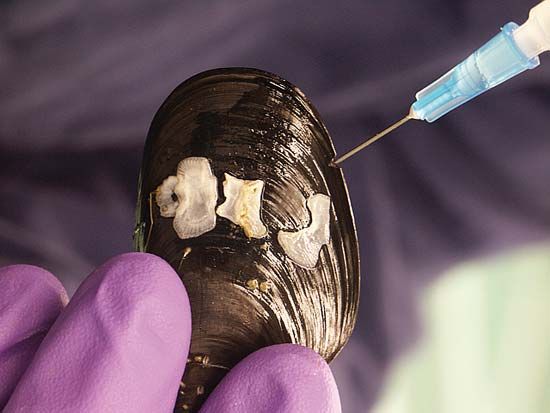
Biomonitoring utilizes various organisms to assess environmental conditions. Macroinvertebrates, like larvae of spiny crawler mayflies, are valuable indicators of water quality due to their sensitivity to pollution. Microorganisms, including bacteria and algae, demonstrate diverse metabolic capabilities, crucial in processes like nitrogen fixation and decomposition, and can be identified through biochemical tests. Sentinel species, such as earthworms, fathead minnows, water fleas, and mussels, are also used to monitor the effects of stressors like pollutants on ecosystem health in terrestrial, freshwater, and marine habitats. Additionally, indicator species like certain plants or worms can reflect specific conditions such as soil salinity or water quality.
6 Britannica SourcesCreated from Britannica articles using AI. AI can make mistakes, so verify using Britannica articles. -
How do substances from the environment enter living organisms in biomonitoring?
In biomonitoring, substances from the environment enter living organisms through various routes, including ingestion (food and drinks), inhalation (infusion through the lungs), and direct contact (absorption through intact skin).
Chemicals like dioxins and synthetic pesticides can leach into the soil and groundwater, contaminating drinking water. Others, such as BPA and phthalates, can leach from plastic containers into food and beverages. Some chemicals, like herbicides and pesticides, can lead to direct exposure through contact, while cosmetics, sunscreens, and insect repellents may also result in direct exposure when applied to the skin.
Once inside the body, some substances are readily excreted, while others accumulate in body tissues or transform into more toxic compounds.
4 Britannica SourcesCreated from Britannica articles using AI. AI can make mistakes, so verify using Britannica articles. -
What can biomonitoring tell us about pollution in the environment?
Biomonitoring measures chemical compounds or their metabolites in biological specimens, such as plants and animals, to provide data on environmental pollution.
Since the 1990s, advances in instrumentation have made it possible to detect a greater number of chemicals in humans at lower costs and levels, using less-invasive procedures. For example, the U.S. Environmental Protection Agency (EPA) ran the National Human Adipose Tissue Survey (NHATS) to test people for levels of fat-soluble environmental contaminants.
The Centers for Disease Control and Prevention (CDC) initiated a national biomonitoring surveillance program as part of the National Health and Nutrition Examination Survey (NHANES). The CDC’s National Report on Human Exposure to Environmental Chemicals provides information on the population’s exposure to various chemicals, with data sorted by age, sex, and ethnicity.
1 Britannica SourceCreated from Britannica articles using AI. AI can make mistakes, so verify using Britannica articles. -
How do scientists collect and analyze samples during biomonitoring studies?
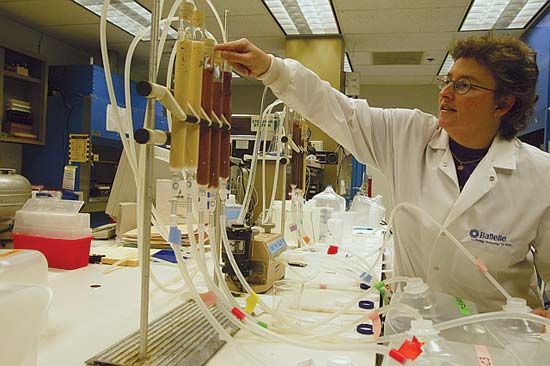
Biomonitoring studies involve collecting and analyzing biological specimens to measure chemical compounds or their metabolites. These measurements can be conducted on nonhuman biological samples, such as plants and animals, but the term is primarily associated with measuring foreign compounds in humans.
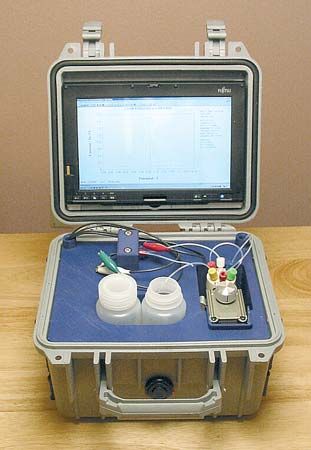
To study the exposome, scientists use biological sampling and omics technologies to understand biological responses to exposures. High-resolution mass spectrometry is a tool used to detect and quantify thousands of environmental chemicals and metabolites in samples like blood, saliva, urine, and tissues, even at very low levels.
5 Britannica SourcesCreated from Britannica articles using AI. AI can make mistakes, so verify using Britannica articles.
Biomonitoring, the measurement of chemical compounds or their metabolites (versions of the compounds that are transformed in the body) in biological specimens. Biomonitoring measurements can be conducted on nonhuman biological samples, such as plants and animals, but use of the term is primarily associated with measuring foreign compounds in humans.
Biomonitoring is used in occupational settings, where workers are monitored for unsafe levels of toxic chemicals, often on a regular schedule. It is also used in clinical practice and, more commonly, in public health research, where it serves as a source of information on community exposures. Well-known examples of human biomonitoring include measuring alcohol content in exhaled breath with a breathalyzer, a device used in law enforcement; testing for drugs in urine via urinalysis, a method also used in law enforcement and in a variety of occupational settings; and measuring concentrations of lead in blood using blood analysis or of arsenic in nails or hair to aid exposure assessments.
Detection of chemicals
The readiness of a chemical to be detected depends on the characteristics of the substance, how it is metabolized by the human body, and whether methods are available to measure it accurately. Some compounds are almost entirely excreted from the body in a short period of time, whereas others accumulate in body tissues for decades or are transformed into more toxic compounds.



 " height="20" alt="HEW Logo">

Since the 1990s, advances in instrumentation have made it possible to detect a greater number of chemicals in humans at lower costs, at lower levels, and using less-invasive procedures. From 1970 to 1992 the U.S. Environmental Protection Agency (EPA) ran the National Human Adipose Tissue Survey (NHATS) to test people for levels of fat-soluble environmental contaminants. The EPA used a minor surgical procedure to obtain fatty tissue from living persons and also analyzed postmortem fat specimens. Analyses of the NHATS data documented a significant presence in the general population of persistent organochlorine pesticides, as well as polychlorinated biphenyls (PCBs). NHATS data also showed declines in certain toxic chemicals over time, mirroring changes mandated by the 1976 Toxic Substance Control Act, which introduced regulations for the use, storage, and disposal of PCBs and other persistent chemicals.
Today fatty components of blood can be used to analyze the same compounds in humans at very low levels. For example, it is now possible to detect certain chemicals in parts per billion, parts per trillion, and, in some cases, parts per quadrillion. Exposure to dioxins (by-products of the manufacture of herbicides, disinfectants, and other agents) in parts per trillion has been found to affect human semen quality.
Studies and surveillance programs
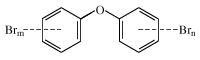
Many biomonitoring studies have focused on the extent of community exposure to a specific environmental contaminant. In 1999 a study was published on the analysis of data collected between 1972 and 1997 as part of a breast-milk surveillance program in Sweden. The analysis revealed that human milk levels of polybrominated diphenyl ethers (PBDEs), chemicals used as flame retardants in many consumer products, had doubled every five years. Other studies detected these chemicals in breast milk from women in Japan, Germany, the United States, and Canada, as well as in killer whales and polar bears in the wild. Although the human health effects of exposure to PBDEs were not clear, the European Union (EU) approved a ban on two forms of PBDEs (penta-BDE and octa-BDE) that went into effect in 2004. On July 1, 2006, the EU also effected a ban on a third form of PBDE, known as deca-BDE. The implementation of these bans was based on the results of tests in animals and on the results of biomonitoring in humans.

In the United States, a national biomonitoring surveillance program was initiated by the Centers for Disease Control and Prevention (CDC) as part of the National Health and Nutrition Examination Survey (NHANES). The NHANES, which has been performed annually since 1999, is used to obtain information on the health and nutrition of approximately 5,000 representative non-institutionalized civilians from the U.S. population. It also collects blood and urine samples from most participants. The CDC’s National Report on Human Exposure to Environmental Chemicals provides information on the population’s exposure to various chemicals, with data sorted by age, sex, and ethnicity. The first report, published in 2001, tested for 27 chemicals. The fourth report, published in 2009, contained results for 212 chemicals and included data from all the national health surveys conducted since 1999.
The trusted destination for professionals, college students, and lifelong learners.
SUBSCRIBE


Sociopolitical relevance of biomonitoring
How biomonitoring data should be interpreted and the extent to which policy decisions should be based on data from reports such as those of the NHANES is a matter of debate. For the vast majority of measured chemicals there is no clear standard for what levels may be considered “safe,” and scientists in academia and industry disagree on whether—and which—chemicals may be harmful at low-level chronic exposures. With tens of thousands of chemicals in commerce, scientific knowledge regarding these questions is far from complete.
In the United States, environmental health activist organizations, such as the Environmental Working Group and the Toxic Free Legacy Coalition, have released a number of reports showing the biomonitoring results of hundreds of chemicals in human blood, in umbilical cord blood from newborns, and in human breast milk from small but not necessarily representative samples. The results have been used to call for the reform of chemical exposure laws in the United States. With a similar intent to inform policy decisions, the World Wildlife Fund–United Kingdom, along with the Women’s Institute and Co-operative Bank, led a “biomonitoring tour” over the course of two weeks in 2003. Organizers and researchers visited 12 locations across the United Kingdom, and 150 people had their blood tested for more than 70 chemicals.
There are a variety of ethical questions raised by biomonitoring. For example, given the scientific uncertainty regarding the health effects of exposure to many of the tested compounds, it is unclear whether information from biomonitoring should be used in guiding policy decisions. In the instance of NHANES and other research programs, there is debate about whether participants should have the right to know the results of the tests. Likewise, the communication of the results of biomonitoring studies to the public, particularly given the lack of knowledge about human health effects, is also an area of concern.
Chemicals encountered in the home environment
Examples of chemicals encountered in the home environment are listed in the table.
| chemical | sources of exposure | toxic effects in humans |
|---|---|---|
| acrylamide | processed foods; grout and soil-stabilizer products; polyacrylamide materials | nervous system dysfunction (acute); probable carcinogen |
| asbestos | flame-retardant building materials, particularly those manufactured prior to the 1980s; occupational exposure during manufacture of asbestos-containing products | lung disease (asbestosis); known carcinogen (mesothelioma) |
| benzene | tobacco smoke and automobile emissions; vapours from benzene-containing dyes, petroleum, waxes, detergents, and paints; occupational exposure via inhalation, ingestion, or contact during manufacture of benzene or benzene-containing products, including plastics and motor fuels | nervous system dysfunction (acute); immune dysfunction (chronic); known carcinogen (leukemia) |
| bisphenol A | water bottles, plastic wraps, and other plastic products | endocrine dysfunction |
| butylated hydroxyanisole (BHA) | food preservative in snack foods, chewing gum, and animal feeds; also used in other products, such as cosmetics and some medicines | anticipated carcinogen in humans |
| dioxin | 2,3,7,8-tetrachlorodibenzo-para-dioxin (2,3,7,8-TCDD) contained in herbicides, disinfectants, and chemical wastes; contaminated foods | chloracne (acute); known carcinogen |
| hexavalent chromium | drinking water and certain anticorrosive products; occupational exposure via inhalation during the manufacturing of chromate chemicals, chromate pigments, and stainless steel | skin and lung irritation; kidney and liver disease; known carcinogen (cancers of respiratory tissues) |
| lead | batteries, ammunition, electrical components, paints, ceramics, pipes, and other metal products; occupational exposure via inhalation, ingestion, or contact during metal processing | lead poisoning (acute); kidney disease, cardiovascular disease, and reproductive dysfunction (chronic); probable carcinogen |
| perchlorate | drinking water and soil | thyroid gland dysfunction |
| perfluorooctanoic acid (PFOA; also known as C8) | water-repellant products, including carpets and other textiles; sealants; cookware with nonstick coatings | endocrine dysfunction; reproductive abnormalities |
| phthalate | a wide variety of plastic-containing products, including food packaging, toys, detergents, vinyl flooring, adhesives, and raincoats | endocrine dysfunction |
| polybrominated diphenyl ether (PBDE) | flame-retardant products, including certain plastics; contaminated foods | endocrine dysfunction |
| radon | soil, rocks, groundwater, and air; produced as a result of radioactive decay of radium | known carcinogen (lung cancer) |