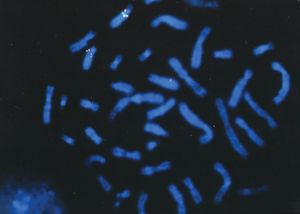
balanced translocation
Quick Summary
A translocation is a type of chromosomal aberration where a segment of one chromosome breaks off and attaches to a different, nonhomologous chromosome. This occurs when breaks happen in two different chromosomes, and their broken ends then rejoin in a new arrangement.1
While a cell with a heterozygous translocation usually has a complete set of genes and can be viable, it often leads to reduced fertility. This is because during meiosis, the process of creating sex cells, the chromosomes involved in the translocation can segregate abnormally. This can result in gametes that are missing genetic material (deletions) or have extra copies (duplications) of certain chromosome regions, typically leading to inviable offspring.1
Ask Britannica AI about this topic
Britannica doesn't have a full article on this topic, so we've curated a list of our relevant coverage.