allelic heterogeneity
Quick Summary
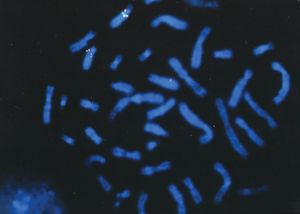
Allelic heterogeneity refers to a situation in genetics where different mutations within the same gene can cause the same or similar genetic disorders. This means that even though the gene is the same, variations in its sequence (alleles) can lead to different manifestations of a disease.1
In genetics, an allele is a variant form of a gene. Genes reside at specific locations on chromosomes, and individuals inherit two copies of each gene, one from each parent. If these copies differ, they are called alleles. While a single gene can have multiple alleles, only two are present in an individual at any given gene locus. Allelic heterogeneity highlights that multiple different alleles can affect the same gene, leading to a particular trait or disease. This contrasts with allelic homogeneity, where a specific disease is consistently caused by the same mutation.231
Ask Britannica AI about this topic
Britannica doesn't have a full article on this topic, so we've curated a list of our relevant coverage.