

"Flying" trees
As in most tropical forests, the trees of Panama exhibit a variety of different adaptations to aid dispersal of their seeds. These adaptations involve substantial investment of the trees’ material, but they are worthwhile because seed dispersal increases both the seeds’ and the species’ chances of survival. Seed destroyers such as herbivores, fungi, and bacteria often concentrate their activities in the vicinity of the parent tree. Therefore, seeds that can come to rest some distance away from the parent tree are more likely to germinate and grow.
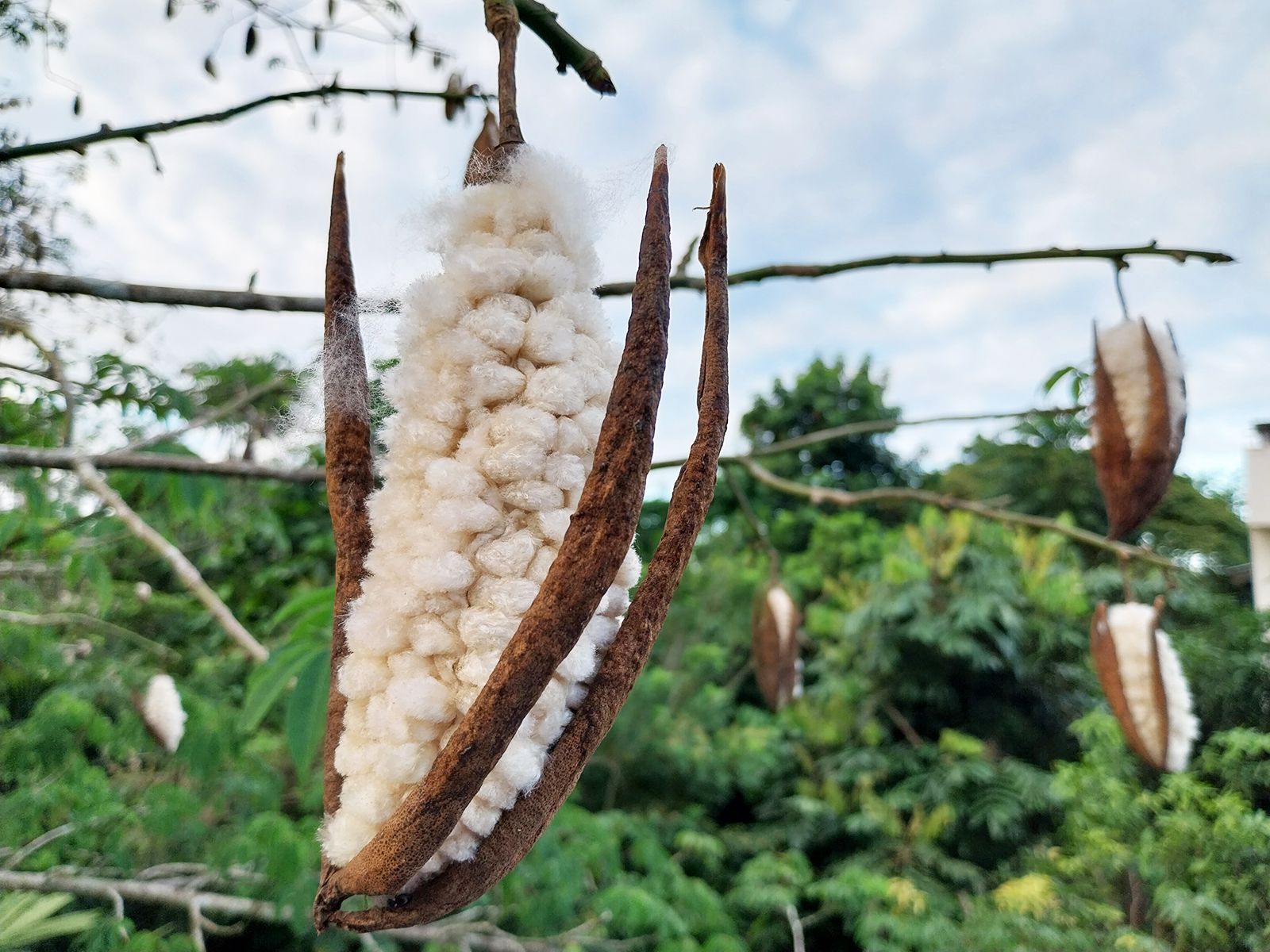
Dispersal efforts that take advantage of air currents can be elaborate. Because the rainforest canopy effectively blocks wind from reaching the environment below, aerial seed dispersal is not as widely afforded as in other, more open ecosystems. Even so, many trees have managed to exploit this strategy. For example, the kapok tree, found in tropical forests throughout the world, is an emergent—a tree whose crown rises well above the canopy. The kapok’s towering height enables it to gain access to winds above the canopy. The tiny seeds of the kapok are attached to fine fibres that, when caught by the wind, enable distribution far from the parent tree. The balsa tree also uses fibrous seeds to distribute its progeny, but it is not an emergent. Instead, balsa grows quickly as a colonizer of gaps in the forest, giving its seeds access to wind while the gap in the trees is still open.
Other trees grow aerodynamic structures to make use of the wind. The canopy trees Platypodium elegans and Tachigalia versicolor (see suicide tree) produce single-winged fruits similar to those of maple trees common in temperate zones. In the case of P. elegans, each fruit is attached to a twig by the tip of its wing and has a dry weight of about 2 grams (0.07 ounce)—only about 20 percent of which is the seed’s weight. They remain unripe for many months, but when Panama’s dry season arrives (January–March) the fruits dry out and are dispersed by strong seasonal winds. Seeds often are blown 50 metres (160 feet) or more. Shaded seedlings within about 30 metres (100 feet) of the parent tree tend to die from fungal attack, but fruits landing farther than 30 metres from the tree or in canopy gaps fare much better. The suicide tree encloses its seeds in elliptical wings that can measure nearly 15 cm (6 inches) long. The tree’s name comes from the fact that, after producing seeds, the tree dies.



 " height="20" alt="HEW Logo">