
- Related Topics:
- Zika fever
- flavivirus
- Flavivirus

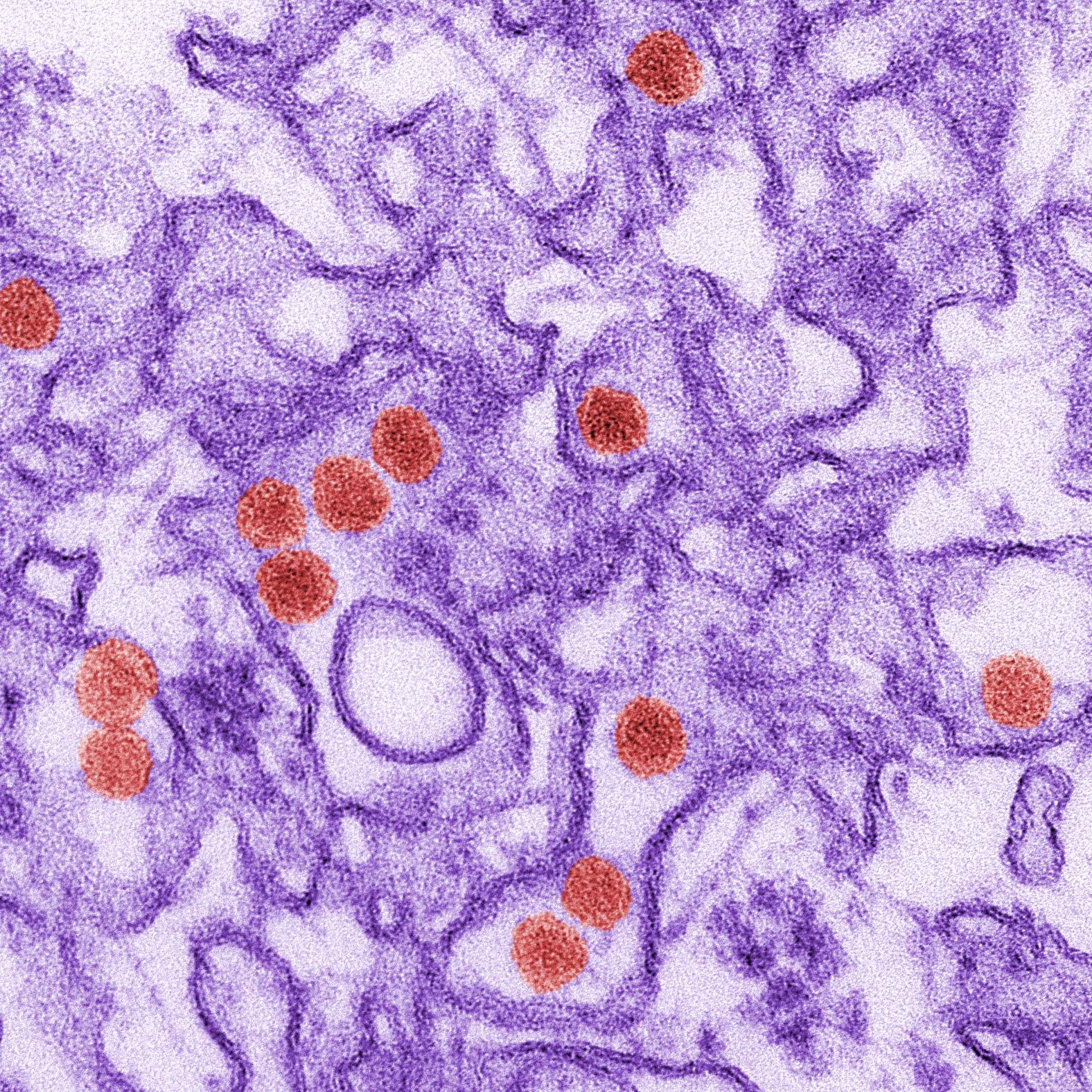
Zika virus
-
What is the Zika virus?
Zika virus is an infectious agent of the genus Flavivirus. It was initially discovered in 1947 in a rhesus monkey in the Zika Forest of Uganda. The virus is transmitted to humans through Aedes mosquitoes, mainly A. aegypti and A. albopictus.
Most infected people do not show symptoms. If symptoms occur, they include fever, rash, joint pain, muscle pain, and conjunctivitis. These symptoms appear 3 to 12 days after transmission and last approximately 4 to 7 days. Although generally mild, Zika fever has been linked to neurological complications, such as Guillain-Barré syndrome, and microcephaly in newborns. There is no specific cure, and treatment is supportive.
2 Britannica SourcesCreated from Britannica articles using AI. AI can make mistakes, so verify using Britannica articles. -
How does the Zika virus spread from person to person?
The Zika virus, an infectious agent of the genus Flavivirus, cycles mainly between primates and mosquitoes, especially Aedes aegypti and Aedes albopictus. It spreads to humans through the bites of infected Aedes mosquitoes. In some instances, the Zika virus can also spread from humans to humans through sexual transmission, blood transfusions, or perinatally (from a mother to her fetus). The spread of the virus from Asia is thought to have been facilitated by human travel and the spread of Aedes mosquitoes capable of transmitting the virus.
2 Britannica SourcesCreated from Britannica articles using AI. AI can make mistakes, so verify using Britannica articles. -
What are common symptoms of a Zika virus infection?
Zika fever, caused by the Zika virus, is typically a mild illness. About one in four or five people infected with Zika develop symptoms, which appear 3 to 12 days after transmission and last 4 to 7 days.
Common symptoms include maculopapular rash (discolored skin elevations), low-grade fever, joint pain and swelling, muscle pain, headache, and conjunctivitis. The rash often starts on the face or trunk and then spreads to the limbs. Some people may experience appetite loss, diarrhea, or vomiting.
While Zika fever has low fatality and hospitalization rates, it has been linked to neurological complications like Guillain-Barré syndrome. It can also cause microcephaly and neurological development delays in children born to infected mothers.
1 Britannica SourceCreated from Britannica articles using AI. AI can make mistakes, so verify using Britannica articles. -
How can Zika virus infection affect pregnant women and their babies?
Zika virus, transmitted by Aedes mosquitoes, poses a threat to pregnant women due to its ability to cause brain anomalies in newborns, including microcephaly (abnormal smallness of the head). About one in four or five people infected with Zika develop symptoms, which appear 3-12 days after transmission and last 4-7 days. Although Zika fever is typically mild, outbreaks have been linked to neurological complications such as Guillain-Barré syndrome. Studies have shown that up to one-third of children exposed to the virus in utero experience delays in neurological development before age three.
3 Britannica SourcesCreated from Britannica articles using AI. AI can make mistakes, so verify using Britannica articles. -
How can people protect themselves from getting Zika virus?
To protect yourself from the Zika virus, use insect repellent and wear long clothing to cover your arms and legs. Ensure screens are installed on open doors and windows, and use insecticide-treated mosquito bed nets.
Eliminate standing water sources to control mosquito populations, as these are ideal breeding sites. The virus is transmitted to humans by Aedes mosquitoes, primarily A. aegypti and A. albopictus, and in rare instances, it can be transmitted sexually or via blood transfusion.
3 Britannica SourcesCreated from Britannica articles using AI. AI can make mistakes, so verify using Britannica articles. -
What methods are used by scientists and doctors to control outbreaks of the Zika virus?
To control Zika virus outbreaks, doctors and scientists use a combination of methods focusing on prevention and supportive care. Because Zika fever can be mistaken for other mosquito-borne diseases, accurate diagnostic testing using reverse transcription-polymerase chain reaction (RT-PCR) technology or serology is essential.
Prevention includes using insect repellent, wearing long clothing, using window screens, and sleeping under insecticide-treated mosquito bed nets. Public health strategies also target mosquito breeding sites by eliminating standing water and applying surface films of oil or larvicides. Researchers are exploring ways to manipulate mosquito populations to prevent viable offspring and using genetic engineering to create mosquitoes that transmit lethal genes to their offspring. There is no specific drug or therapy for Zika fever, so treatment is supportive.
5 Britannica SourcesCreated from Britannica articles using AI. AI can make mistakes, so verify using Britannica articles.
Zika virus, infectious agent of the genus Flavivirus in the family Flaviviridae. Zika virus was first isolated in 1947 from a rhesus monkey that had been caged in the canopy of the Zika Forest in Uganda. The following year it was isolated from Aedes africanus mosquitoes collected from the same forest. Antibodies against Zika virus were first identified in humans in the early 1950s. The virus subsequently was found to cause a febrile illness in humans, known as Zika fever, symptoms of which are similar to certain other mosquito-borne diseases, including dengue and chikungunya fever.
Zika virus is a single-stranded RNA virus with a genome length of 10,794 nucleotides. The genome encodes a polypeptide that produces three structural and seven nonstructural proteins; the structural proteins include the capsid, the envelope, and the membrane complex. Nucleotide sequence analyses have identified two major Zika virus lineages, an African and an Asian lineage, each of which contains multiple strains of virus. Strains belonging to the Asian lineage have been disseminated geographically and have become indigenous in distant regions, including parts of the Americas.
Antibodies to Zika virus have been found in a number of animal species, including monkeys, elephants, lions, zebras, and rodents. However, nonhuman and human primates are thought to be the major hosts and reservoirs, with Aedes mosquitoes serving as the agents of transmission. Most humans who become infected with Zika virus show no symptoms of illness. When symptoms are apparent, they generally consist of low-grade fever, maculopapular rash (discoloured elevations of the skin), headache, joint and muscle pain, and conjunctivitis. The illness typically is self-limiting, lasting about four to seven days.



 " height="20" alt="HEW Logo">
Although generally mild in nature, Zika fever was associated in the early 21st century with severe neurological complications, including Guillain-Barré syndrome (an autoimmune syndrome frequently culminating in limb paralysis) and microcephaly (abnormal smallness of the head) in newborns. In 2016 researchers proved that the latter is caused by maternal Zika virus infection. (For more information about the illness, including its diagnosis and treatment, see Zika fever.)
The spread of Zika virus from Asia is thought to have been facilitated by human travel and the spread of Aedes mosquitoes capable of transmitting the virus. The principal vectors, A. aegypti and A. albopictus, are native to Africa and Asia, respectively. However, both species have spread from those regions to distant areas, including the South Pacific and the Americas. In addition, Zika virus may be readily taken up and transmitted by endemic Aedes species; for example, A. polynesiensis, native to islands in the South Pacific, was a probable vector in a large Zika fever outbreak in French Polynesia in 2013. Zika virus likely was imported into previously unaffected regions by human travelers with active asymptomatic or symptomatic infection; a bite by an Aedes vector would enable the establishment of a local transmission cycle between humans and mosquitoes. The extensive and rapid spread of the virus in the Americas in 2015–16, along with its association with neurological complications, led the director general of the World Health Organization, Margaret Chan, to declare Zika virus a Public Health Emergency of International Concern on February 1, 2016.