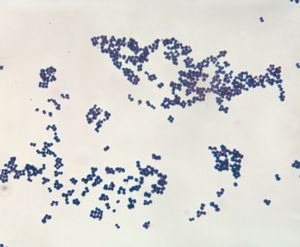
Staphylococcus epidermidis
Quick Summary
Staphylococcus epidermidis is a species of spherical bacteria that commonly resides on human skin and mucous membranes. While generally considered a mild pathogen, it can cause opportunistic infections in individuals with weakened immune systems.1
These bacteria are characterized by their gram-positive nature, absence of spores, non-motility, and ability to survive with or without oxygen. They tend to cluster in grapelike arrangements, a characteristic that gives the genus its name, derived from Greek words meaning "bunch of grapes". Unlike Staphylococcus aureus, S. epidermidis does not produce coagulase, an enzyme that causes blood to clot.12
Ask Britannica AI about this topic
Britannica doesn't have a full article on this topic, so we've curated a list of our relevant coverage.