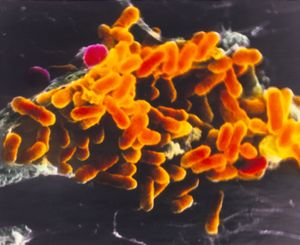
Rickettsia typhi
Quick Summary
Rickettsia typhi is a bacterium that causes endemic, or murine, typhus in humans. This disease is primarily transmitted to humans through the feces of infected rat fleas, specifically the Xenopsylla cheopis species. While rats are the main reservoir for R. typhi, other small rodents can also be infected.1
Typhus is a group of acute infectious diseases characterized by sudden onset of headache, chills, fever, and general pains, often followed by a rash and toxemia. Rickettsia bacteria are the cause of these diseases, and they are transmitted to humans by vectors such as lice, fleas, mites, or ticks. R. typhi infections are generally milder than epidemic typhus, with fewer complications and a fatality rate of less than 5 percent. Antibiotics, particularly doxycycline or chloramphenicol, are effective treatments for rickettsial diseases.12
Ask Britannica AI about this topic
Britannica doesn't have a full article on this topic, so we've curated a list of our relevant coverage.