
Britannica
Sources used in this answer
How does liquid chromatography differ from gas chromatography?
Created from Britannica articles
using AI.
AI can make mistakes, so verify using Britannica articles.
sample preparation
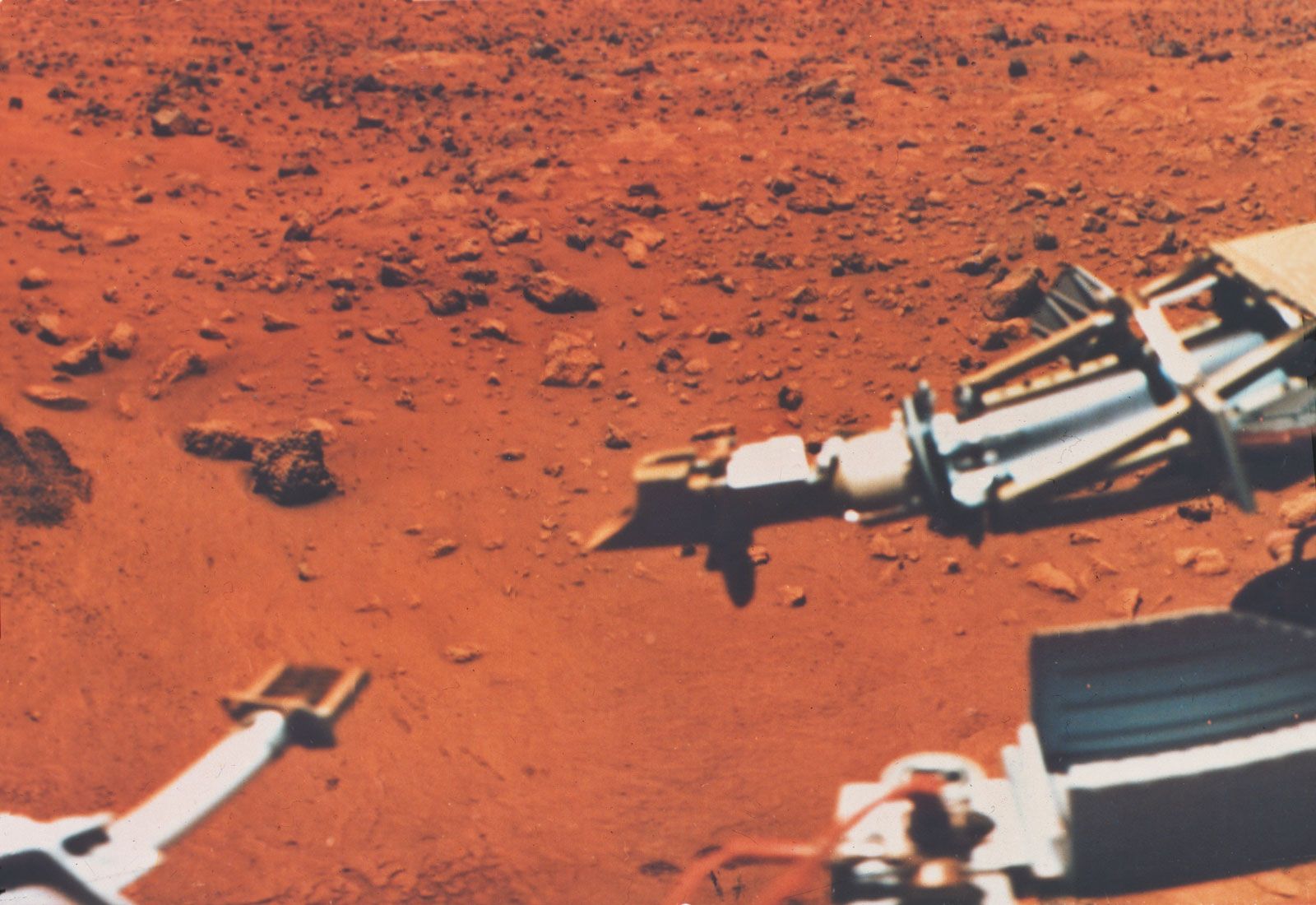
Viking 1's sample scoop, poised to extract material from the surface of Mars.
The primary difference between liquid chromatography (LC) and gas chromatography lies in the physical state of the mobile phase used to transport the sample through the system.12
- Mobile Phase: In LC, the mobile phase is a liquid, whereas in GC, it is an inert carrier gas, such as helium or argon.132
- Vaporization Requirement: Because GC relies on a gas stream, samples must typically be vaporized before injection. Consequently, GC is best suited for compounds that can be volatilized without decomposition. In contrast, LC does not require sample vaporization, allowing it to separate a much broader range of substances, including nonvolatile or thermally unstable compounds like proteins, amino acids, and inorganic ions.32
- Separation Mechanism: In both techniques, components are separated based on their relative affinity for the stationary phase versus the mobile phase. However, because LC uses a liquid mobile phase, it offers unique variations such as reverse-phase chromatography and ion-exchange chromatography, which are highly effective for complex biological and chemical mixtures.12