

Entamoeba histolytica
Quick Summary
Entamoeba histolytica is a protozoan parasite that causes amebiasis in humans. It belongs to the genus Entamoeba, a group of amoeboid organisms known for their ability to move using temporary cytoplasmic extensions called pseudopodia.12
E. histolytica primarily infects the large intestine, where it can cause diarrhea, abdominal pain, and fever by ulcerating the intestinal walls. If the amoebas enter the bloodstream, they can spread to other organs like the liver, lungs, brain, and spleen, forming abscesses. The parasite is transmitted through contaminated food and water, often via cysts. While some E. histolytica infections are asymptomatic, others can be severe.13
Ask Britannica AI about this topic
Britannica doesn't have a full article on this topic, so we've curated a list of our relevant coverage.
 dysentery
…is caused by the protozoan Entamoeba histolytica. This form of dysentery, which traditionally occurs in the tropics, is usually much more chronic and insidious than the bacillary disease and is more difficult to treat because the causative organism occurs in two forms, a motile one and a cyst, each of…
Read More…is caused by the protozoan Entamoeba histolytica. This form of dysentery, which traditionally occurs in the tropics, is usually much more chronic and insidious than the bacillary disease and is more difficult to treat because the causative organism occurs in two forms, a motile one and a cyst, each of…
Read More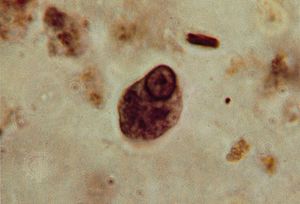 Entamoeba
…of many vertebrates, including humans; E. histolytica is the cause of human amebic dysentery. The cell nucleus, which is distinctive for the genus, contains a central body, the endosome, and a ring of uniformly sized granules attached to the nuclear membrane.
Read More…of many vertebrates, including humans; E. histolytica is the cause of human amebic dysentery. The cell nucleus, which is distinctive for the genus, contains a central body, the endosome, and a ring of uniformly sized granules attached to the nuclear membrane.
Read More
