





- Also called:
- Down’s syndrome, trisomy 21, or
- (formerly):
- mongolism
- Key People:
- Gregg L. Semenza

Down syndrome
-
What is Down syndrome?
Down syndrome is a congenital disorder resulting from extra genetic material from chromosome 21. It occurs in roughly 1 in every 700–1,100 live births. Common characteristics include a small head, flattened face, short neck, and intellectual disability, typically ranging from mild to moderate.
The incidence of Down syndrome increases in offspring of women over age 35. Screening tests, such as ultrasound and blood analysis, can detect Down syndrome during the 11th and 14th week of pregnancy.. While there are no specific drugs to treat Down syndrome, medical care enables many individuals to live into adulthood with an average life expectancy of about 60 years.
2 Britannica SourcesCreated from Britannica articles using AI. AI can make mistakes, so verify using Britannica articles. -
How does Down syndrome happen?
Down syndrome is a congenital disorder that arises from extra genetic material from chromosome 21. In most cases, this occurs as trisomy 21, where cells have three copies of chromosome 21 instead of the usual two. This extra chromosome results from abnormal cell division during embryonic development or in egg or sperm cells.
Less frequently, mosaic Down syndrome occurs when only some cells have the extra chromosome, often resulting in less severe symptoms. Translocation Down syndrome, the only type that can be inherited, happens when part of chromosome 21 attaches to another chromosome. A parent with this balanced translocation can pass it on, though they themselves do not show symptoms. Numerical abnormalities are typically caused by meiotic nondisjunction, where chromosomes divide unequally during gamete formation, and the risk of this happening increases with maternal age.
4 Britannica SourcesCreated from Britannica articles using AI. AI can make mistakes, so verify using Britannica articles. -
What are some common signs of Down syndrome?
Down syndrome is a congenital disorder stemming from extra genetic material from chromosome 21, often resulting in trisomy 21. Common physical signs include a small head, flattened face, short neck, and up-slanted eyes. Other indicators can be low-set ears, an enlarged tongue and lips, and a sloping underchin. Individuals may also exhibit poor muscle tone and heart or kidney malformations. Intellectual disability, typically ranging from mild to moderate, is also seen in all instances of Down syndrome.
2 Britannica SourcesCreated from Britannica articles using AI. AI can make mistakes, so verify using Britannica articles. -
How can Down syndrome affect a person's health and learning?
Down syndrome is a congenital disorder stemming from extra genetic material from chromosome 21, which can impact health and learning.
Health:
* About half of those with Down syndrome have congenital heart disease.
* Individuals may experience malformations of the heart or kidneys.
* There is a shorter life expectancy due to the early onset of degenerative conditions, such as Alzheimer's disease.Learning:
* All individuals with Down syndrome have some degree of intellectual disability, typically ranging from mild to moderate.
* Development of motor, language, and social skills may be delayed.
* Early childhood intervention programs can minimize developmental delays and promote growth.4 Britannica SourcesCreated from Britannica articles using AI. AI can make mistakes, so verify using Britannica articles. -
How is Down syndrome diagnosed?
Down syndrome, a congenital disorder stemming from extra genetic material from chromosome 21, can be diagnosed through screening and diagnostic tests.
Screening tests, such as ultrasound and blood analysis, during the 11th and 14th week of pregnancy can detect most cases of Down syndrome. Noninvasive prenatal testing (NIPT) analyzes maternal blood samples after the 10th week of pregnancy to detect fetal DNA carrying the extra chromosome associated with trisomy 21.
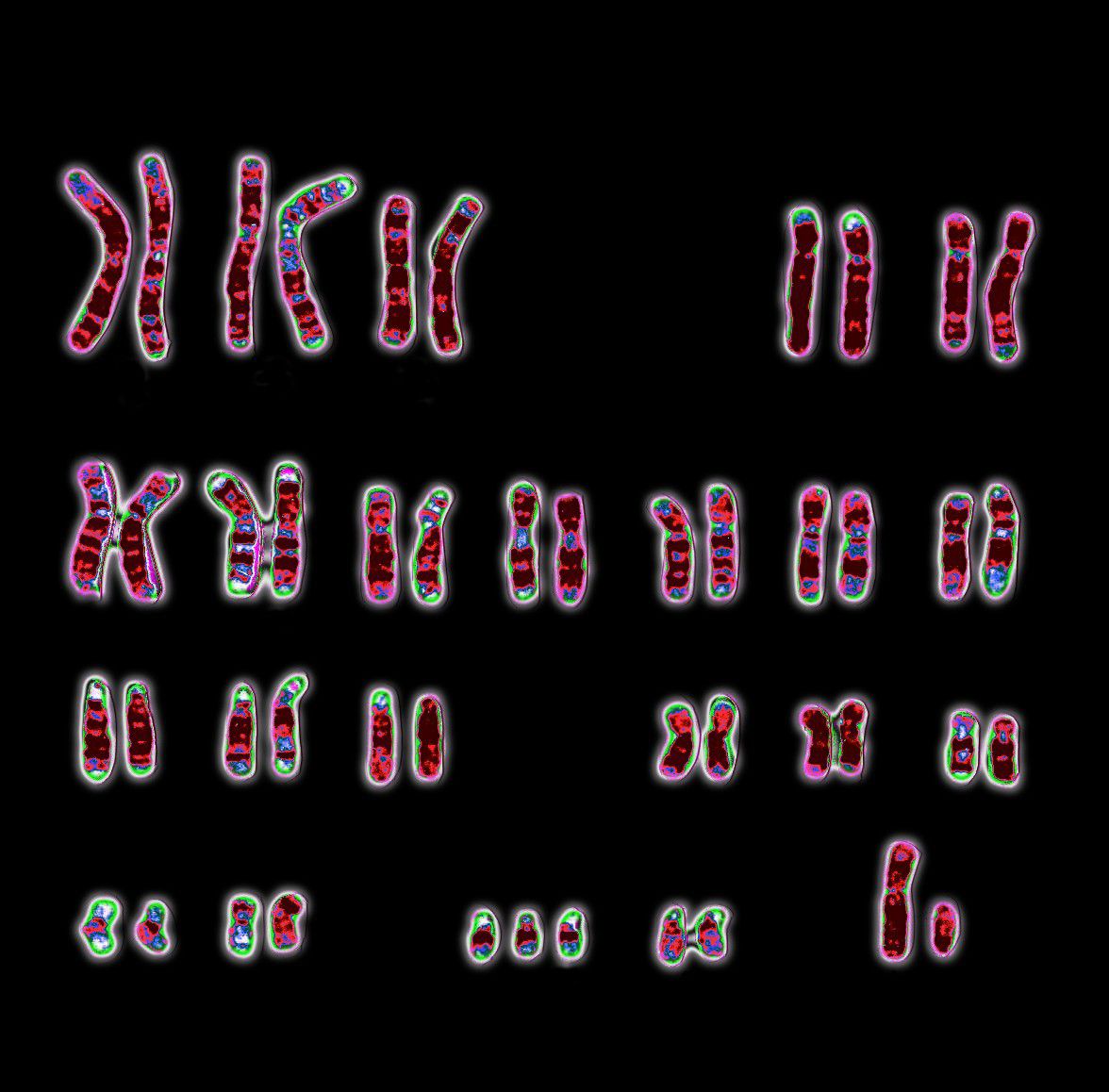
If Down syndrome is suspected, amniocentesis or chorionic villus sampling can confirm the diagnosis. These invasive tests analyze fetal cells from the amniotic fluid or placenta for the abnormal chromosome but carry an increased risk of miscarriage. Karyotyping, a visual representation of chromosomes, can also identify chromosomal aberrations, like the atypical chromosome number in Down syndrome.
3 Britannica SourcesCreated from Britannica articles using AI. AI can make mistakes, so verify using Britannica articles. -
What types of support and therapies help people with Down syndrome live healthy lives?
Support and therapies can help people with Down syndrome live healthy lives. Early childhood intervention services can minimize developmental delays and disabilities, while also providing support to promote general well-being. These interventions look to reduce or remove emotional, cognitive, social, and environmental barriers while promoting development and health through support and stimulation. Although there are no specific drugs to treat Down syndrome, scientists have explored potential therapeutic options such as gene editing and chemical injections to improve learning and memory. With modern medical care, many individuals with Down syndrome are living into adulthood, around age 60 on average.
2 Britannica SourcesCreated from Britannica articles using AI. AI can make mistakes, so verify using Britannica articles.
Down syndrome, congenital disorder caused by the presence in the human genome of extra genetic material from chromosome 21. The affected individual may inherit an extra part of chromosome 21 or an entire extra copy of chromosome 21, a condition known as trisomy 21. British physician John Langdon Down first described the physical features of Down syndrome in 1866, and thus the disorder was later named for him.
The physical and cognitive impacts of Down syndrome range from mild to severe. Some common physical signs of the disorder include a small head, flattened face, short neck, up-slanted eyes, low-set ears, enlarged tongue and lips, and sloping underchin. Other characteristics of the disorder may include poor muscle tone, heart or kidney malformations (or both), and abnormal dermal ridge patterns on the palms of the hands and soles of the feet. Intellectual disability occurs in all persons with Down syndrome and usually ranges from mild to moderate. Congenital heart disease is found in about 40 to 60 percent of people with Down syndrome.
Types of Down syndrome
There are three types of Down syndrome. The most common form is trisomy 21, in which all of an individual’s cells contain three, as opposed to two, copies of chromosome 21. The extra chromosome, identified in 1959 by French geneticist Jérôme-Jean-Louis-Marie Lejeune, is a result of random, abnormal events in cell division that occur during embryonic development or during the development of egg or sperm cells. The presence of the extra chromosome in cells gives rise to the signs and symptoms of Down syndrome.



 " height="20" alt="HEW Logo">

In mosaic Down syndrome, a rare form of the disorder, only some of an individual’s cells contain a third copy of the chromosome. Because there are some cells that retain the normal 46 chromosomes, certain aspects of the disorder, such as intellectual disability, are not as severe in persons with mosaic Down syndrome relative to persons with trisomy 21.
The third type, translocation Down syndrome, occurs when the extra chromosome in the 21 pair breaks off and attaches itself to another chromosome. Translocation Down syndrome is the only type that may be inherited. A parent who possesses a balanced translocation—a chromosome rearrangement with no extra genetic material from chromosome 21—can pass the translocation to an offspring. Carriers of balanced translocations do not have signs or symptoms of the disorder. Mothers carrying a translocation have a 10–12 percent risk of transmitting the genetic rearrangement to their offspring, whereas fathers carrying a translocation have a 3 percent risk of transmission.
Incidence and diagnosis
Down syndrome occurs in about 1 in roughly every 700–1,100 live births. The incidence of the disorder increases markedly in the offspring of women over age 35. For example, the incidence of the disorder in the offspring of women under age 30 is less than 1 in 1,000, whereas its incidence in the offspring of women over age 40 can range from about 1 in 100 to 1 in 30. In addition, women who have had one child with Down syndrome have a 1 percent chance of having a second child with the disorder. Screening tests using both ultrasound and blood analysis that are performed between the 11th and 14th week of pregnancy can detect most incidences of Down syndrome.
In cases where Down syndrome is suspected, the disorder can be confirmed using amniocentesis or chorionic villus sampling. In these diagnostic tests, samples of fetal cells are taken from the amniotic fluid or from the mother’s placenta and analyzed for the presence of the abnormal chromosome. Because these procedures are invasive, however, they are associated with an increased risk of miscarriage.
The trusted destination for professionals, college students, and lifelong learners.
SUBSCRIBE


Noninvasive prenatal testing (NIPT) is also available for the early detection of Down syndrome. During pregnancy, small numbers of fetal cells enter the maternal circulation. Maternal blood samples collected after the 10th week of pregnancy can be analyzed using specially designed fragments of DNA (deoxyribonucleic acid), known as probes, that are capable of recognizing and binding to fetal DNA carrying the extra chromosome associated with trisomy 21. Because the probes are labeled with a molecular marker (e.g., a fluorescent or radioactive molecule), fetal cells carrying the extra chromosome can be easily detected in laboratory analysis.
Care of persons with Down syndrome
With modern medical care, many persons with Down syndrome live into adulthood, although they do have a shorter life expectancy, living on average to about 60 years, than normal adults because they develop the degenerative conditions of old age prematurely. Complications associated with Down syndrome include major heart defects that cannot be corrected by surgery, infection such as pneumonia, leukemia, and early-onset Alzheimer disease. Depending on the severity of intellectual disability, some people with Down syndrome never become self-supporting. However, the majority can be taught to contribute usefully in the home or in a sheltered working or living environment after they are grown.
There are no drugs designed to treat Down syndrome, because little is known about the exact molecular mechanisms that give rise to the symptoms of the disorder. However, scientists have explored several potential therapeutic options for Down syndrome. Investigations in animals have included the injection of chemicals into specific regions of the brain, namely the cerebellum or hippocampus, in newborn mice with Down syndrome. Scientists then observed the animals for functional improvements in learning and memory. Scientists have also explored the possibility, in animals and in human cells, of using gene editing to selectively eliminate entire extra copies of chromosome 21.