

BRCA1
Quick Summary
BRCA1 is a tumor suppressor gene that plays a crucial role in repairing DNA damage and maintaining genetic integrity within cells. Mutations in BRCA1, and its related gene BRCA2, significantly increase the risk of developing certain cancers, most notably breast cancer and ovarian cancer. These genes are often referred to as BRCA genes, an abbreviation for breast cancer genes. The discovery of BRCA1 in 1994 by Mary-Claire King marked a significant advancement in understanding hereditary forms of breast cancer.12
Ask Britannica AI about this topic
Britannica doesn't have a full article on this topic, so we've curated a list of our relevant coverage.
 tumor suppressor gene
…two other tumor suppressor genes, BRCA1 and BRCA2, are associated with an increased susceptiblity to breast cancer; they are found in 5 to 10 percent of all cases and in about 85 percent of all cases of inherited breast cancer.
Read More…two other tumor suppressor genes, BRCA1 and BRCA2, are associated with an increased susceptiblity to breast cancer; they are found in 5 to 10 percent of all cases and in about 85 percent of all cases of inherited breast cancer.
Read More breast cancerCauses and symptoms
in genes called HER2, BRCA1, BRCA2, CHEK2, and p53 have been linked to breast cancer. These mutations may be inherited or acquired. Mutations that are inherited often substantially increase a person’s risk for developing breast cancer. For example, whereas some 12 percent of women in the general population develop…
Read Morein genes called HER2, BRCA1, BRCA2, CHEK2, and p53 have been linked to breast cancer. These mutations may be inherited or acquired. Mutations that are inherited often substantially increase a person’s risk for developing breast cancer. For example, whereas some 12 percent of women in the general population develop…
Read More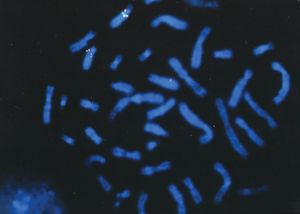 human genetic diseaseGenetics of cancer
…one of two specific genes, BRCA1 and BRCA2, account for at least half of the cases observed. The BRCA1 and BRCA2 genes both encode protein products believed to function in the pathways responsible for sensing and responding to DNA damage in cells. While a woman in the general population has…
Read More…one of two specific genes, BRCA1 and BRCA2, account for at least half of the cases observed. The BRCA1 and BRCA2 genes both encode protein products believed to function in the pathways responsible for sensing and responding to DNA damage in cells. While a woman in the general population has…
Read More
