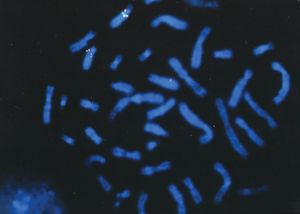
BCR/abl
Quick Summary
The BCR-ABL oncogene is a fusion gene created by a chromosomal translocation, specifically the Philadelphia chromosome. This genetic abnormality occurs when a segment of chromosome 9, containing the c-ABL proto-oncogene, fuses with a segment of chromosome 22, known as the breakpoint cluster region (BCR).1
This fusion gene produces a hybrid protein that is a constitutively active tyrosine kinase. This means it constantly signals cancer cells to grow and divide, leading to the development of certain leukemias, most notably chronic myelogenous leukemia (CML). Targeted therapies, such as imatinib (Gleevec), have been developed to specifically inhibit this BCR-ABL protein, making CML a manageable chronic condition.21
Ask Britannica AI about this topic
Britannica doesn't have a full article on this topic, so we've curated a list of our relevant coverage.