
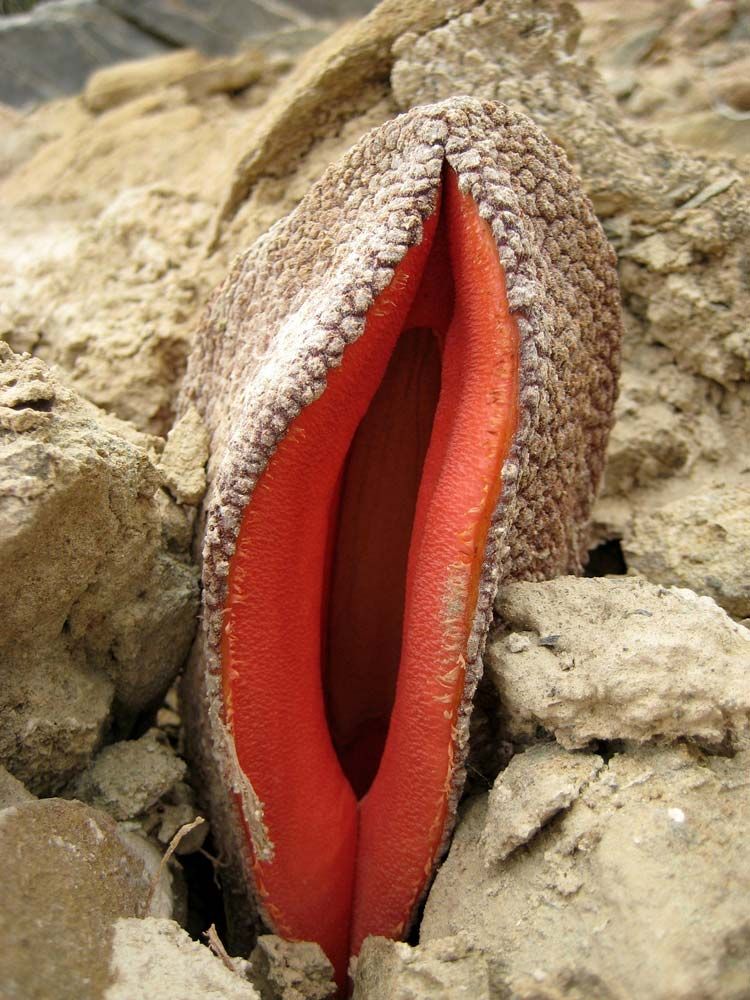

Hydnora africana
Quick Summary

Hydnora africana is an unusual parasitic flowering plant native to Africa, Madagascar, and the Arabian Peninsula. It lacks leaves and chlorophyll, meaning it cannot perform photosynthesis and is entirely dependent on host plants for nutrients. The plant exists mostly underground, with its sprawling root system, called rhizomes, penetrating the roots of its hosts via haustoria.1
Large, fleshy flowers emerge from the root system, often after rainfall. These flowers have a foul smell, attracting beetles for pollination. The fruit develops underground and is dispersed by animals. Hydnora africana is known for its host specificity, often parasitizing plants like Acacia trees or Euphorbia spurges. Its fruits are edible and used in traditional medicine.1
Ask Britannica AI about this topic
Britannica doesn't have a full article on this topic, so we've curated a list of our relevant coverage.
