
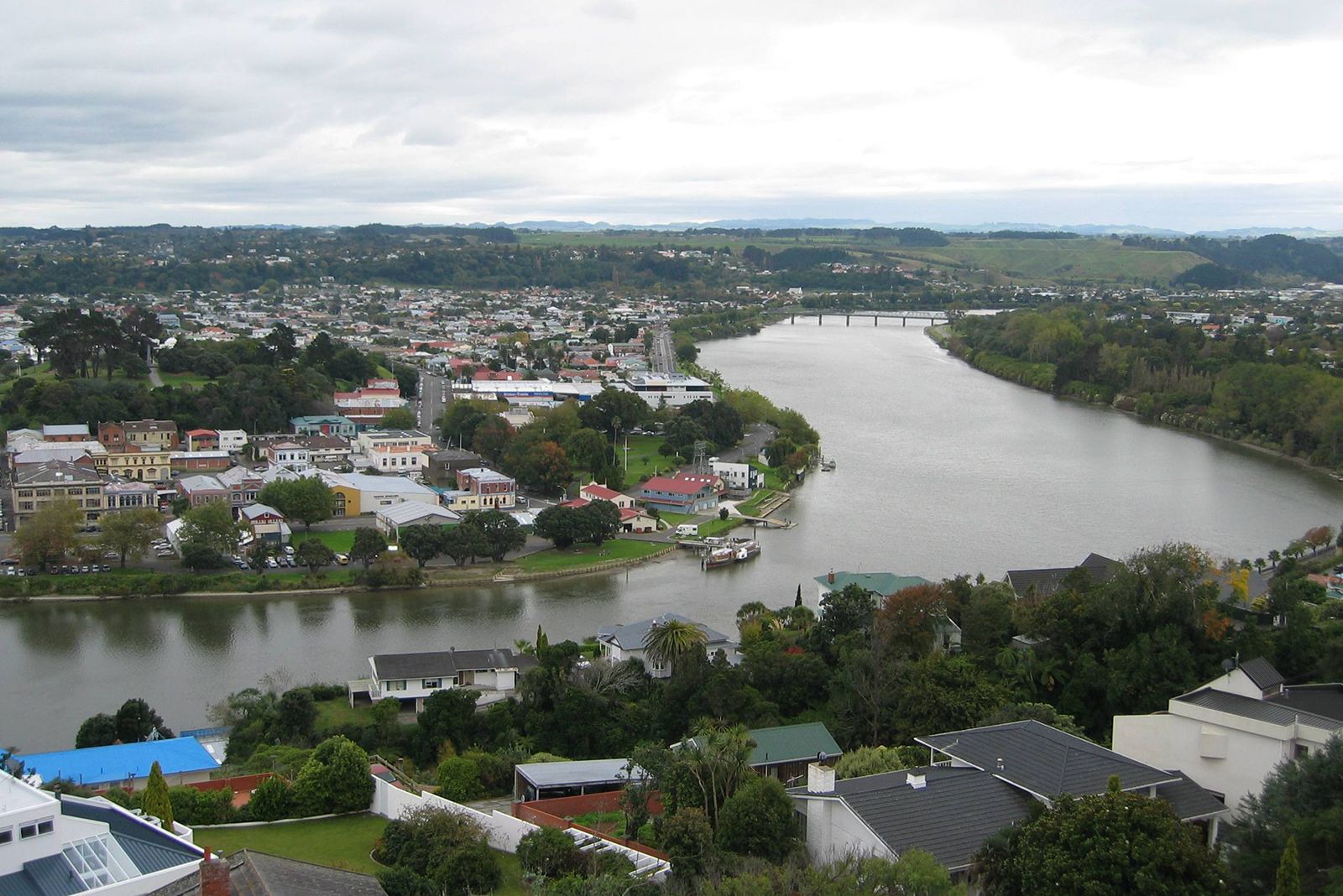




Whanganui River
Whanganui River, river in central North Island, New Zealand. It rises on the western slopes of Mount Ngauruhoe and flows northwest to Taumarunui and then south to empty into the Tasman Sea at South Taranaki Bight. Draining a basin of 2,850 square miles (7,380 square km), the Whanganui is 180 miles (290 km) long, the third-longest river in the country. It is fed by the Ongarue, Tangarakau, and Ohura rivers. A sandbar at its mouth, near Whanganui city, blocks the channel to large ships; but small boats can navigate almost its entire length. Some of the river’s headwaters are diverted to help power a hydroelectric system, which has led to environmental concerns. Notably, while only a small percentage of water is being taken, it is the river’s cleanest and coldest. Local farming has also caused problems.
The river has special meaning to the Māori, who consider it an ancestor. For a number of years a local tribe sought to have the Whanganui declared a person, and in 2017 it became the first river in the world to be granted the same legal rights as a human.


