


West Lothian
-
What is West Lothian?
West Lothian is a council area and historic county in southeastern Scotland, located west of Edinburgh on the southern shore of the River Forth estuary. The historic county borders the Firth of Forth, and the council area includes most of the historic county, except for areas around Bo’ness and South Queensferry.
West Lothian has evidence of prehistoric settlement and was part of the historic region of Lothian during the Middle Ages. By the 16th century, it was a separate county known as Linlithgowshire, after its county town, Linlithgow. New industries such as electronics, software manufacturing, and biotechnology have replaced heavy industry in the council area. Livingston, Linlithgow, and Bathgate serve as the administrative centers.
4 Britannica SourcesCreated from Britannica articles using AI. AI can make mistakes, so verify using Britannica articles. -
Where is West Lothian located in Scotland?
West Lothian is a council area and historic county in southeastern Scotland. It is located on the southern shore of the River Forth estuary and the Firth of Forth, just west of Edinburgh. West Lothian borders the Forth from Bo’ness to the mouth of the River Almond. The council area encompasses most of the historic county, excluding the area around Bo’ness, which lies within the Falkirk council area, and the area along the Forth around South Queensferry, which lies within the council area of the city of Edinburgh.
4 Britannica SourcesCreated from Britannica articles using AI. AI can make mistakes, so verify using Britannica articles. -
What is the main town or administrative center of West Lothian?
Linlithgow is the historic county town (seat) and one of the administrative centers of West Lothian. The West Lothian council area also lists Livingston and Bathgate as administrative centers.
The historic county of West Lothian was previously known as Linlithgowshire, named after its county town, Linlithgow. West Lothian is a council area and historic county in southeastern Scotland, located on the southern shore of the River Forth estuary and the Firth of Forth, just west of Edinburgh.
4 Britannica SourcesCreated from Britannica articles using AI. AI can make mistakes, so verify using Britannica articles. -
What are some important industries or economic activities in West Lothian?
West Lothian has transitioned from heavy industry to new sectors such as electronics, software manufacturing, food and beverage processing, precision engineering, and biotechnology. Livingston, a "new town" in the council area's center, is home to numerous high-technology firms. While the best agricultural land lies in the north and west, producing wheat, barley, fodder crops, and potatoes, there is an increasing emphasis on dairying, and sheep are raised on the higher lands in the south.
4 Britannica SourcesCreated from Britannica articles using AI. AI can make mistakes, so verify using Britannica articles. -
What notable historical sites or landmarks can be found in West Lothian?
West Lothian, Scotland, boasts several historical sites and landmarks. Linlithgow contains the remains of one of Scotland’s four royal palaces, begun by James I. Both Mary, Queen of Scots, and her father, James V, were born there. Another impressive royal castle is at the edge of Blackness village.
St. Michael’s Church in Linlithgow stands out as one of Scotland's finest parish churches, alongside the 12th-century Romanesque parish church at Dalmeny. The Antonine Wall, built by the Romans in the 2nd century CE, had its eastern end at Bridgeness, near Bo’ness.
3 Britannica SourcesCreated from Britannica articles using AI. AI can make mistakes, so verify using Britannica articles. -
How is local government organized in West Lothian, and what services does it provide?
West Lothian is a council area and historic county in southeastern Scotland, located on the southern shore of the River Forth estuary and the Firth of Forth. The council area encompasses most of the historic county, excluding areas around Bo’ness and South Queensferry. It also includes a portion of the historic county of Midlothian. Livingston, Linlithgow, and Bathgate serve as the administrative centers. New industries such as electronics, software manufacturing, and biotechnology have replaced heavy industry in the council area.
2 Britannica SourcesCreated from Britannica articles using AI. AI can make mistakes, so verify using Britannica articles.
West Lothian, council area and historic county, southeastern Scotland, on the southern shore of the River Forth estuary and the Firth of Forth just west of Edinburgh. The council area and historic county occupy somewhat different areas. The historic county borders the Forth from Bo’ness to the mouth of the River Almond just west of Cramont. It extends southwest across a lowland area between the Rivers Avon and Almond. West Lothian council area encompasses most of the historic county, with the exceptions of the area around Bo’ness, which lies within the Falkirk council area, and the area along the Forth around South Queensferry, which lies within the council area of the city of Edinburgh. West Lothian council area also incorporates a portion of the historic county of Midlothian that extends south of the Almond to the crest of the Pentland Hills.
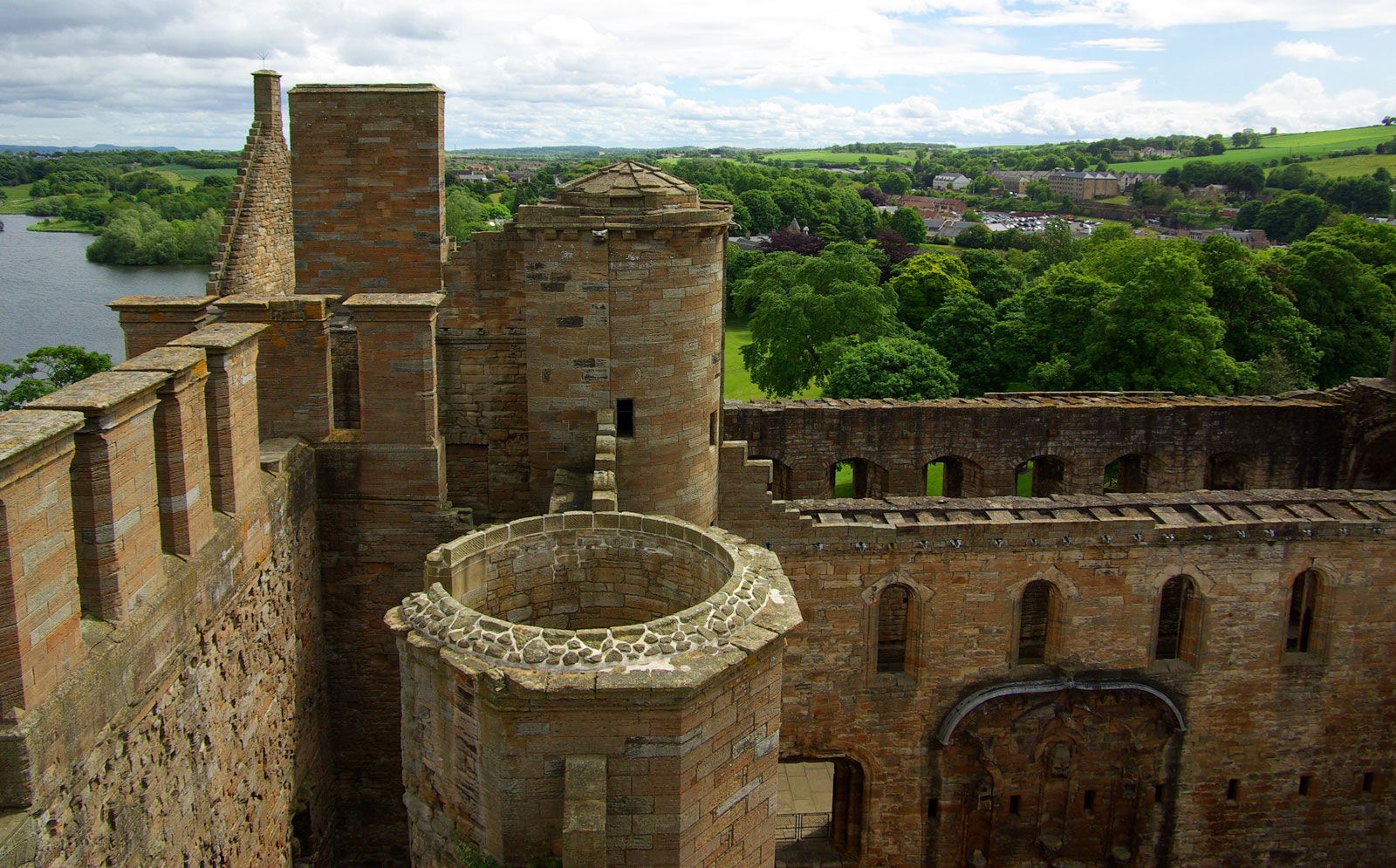
Pit graves and burial mounds provide evidence of extensive prehistoric settlement in the historic county of West Lothian. The Antonine Wall, which the Romans built in the 2nd century ce between the Firth of Forth in the east and the River Clyde in the west, had its eastern termination at Bridgeness, near Bo’ness. During the Middle Ages West Lothian was the westernmost portion of the historic region of Lothian. It had gained the status of a separate county by the 16th century, and until the 20th century it was known as Linlithgowshire, after its county town (seat) Linlithgow. There are many fine buildings of architectural interest in West Lothian. In the Middle Ages Linlithgow Palace at Linlithgow was a favorite Scottish royal residence and the birthplace of James V of Scotland and Mary, Queen of Scots. Another impressive royal castle is at the edge of the village of Blackness. St. Michael’s Church in Linlithgow is one of the finest parish churches in Scotland, as is the 12th-century Romanesque parish church at Dalmeny. By the 11th century South Queensferry, along the Firth of Forth, was the site of a ferry across the Firth to the county of Fife.
The Industrial Revolution in the late 18th and 19th centuries spurred coal and iron ore mining and some heavy industry in southwestern West Lothian, around Bathgate. The completion of the Forth Rail Bridge in 1890 provided an alternative to the historic ferry across the Forth, and the opening of the 1.1-mile- (1.8-km-) long Forth Road Bridge in 1964 led to the end of ferry service across the Forth. By the late 20th century coal mining and heavy industry had virtually disappeared in West Lothian.



New industries—including electronics and software manufacturing, food and beverage processing, precision engineering, and biotechnology and life science companies—have replaced heavy industry in the council area. The “new town” of Livingston, at the center of West Lothian council area, has several high-technology firms. The best agricultural land is in the lower areas in the north and west. Wheat, barley, fodder crops, and potatoes are important, although there is increasing emphasis on dairying. Sheep are raised on the higher land in the south. Livingston, Linlithgow, and Bathgate are the administrative centers. Area council area, 165 square miles (428 square km). Pop. (2011) council area, 175,118; (2022) council area, 181,278..