


Tower of Belém
Quick Summary
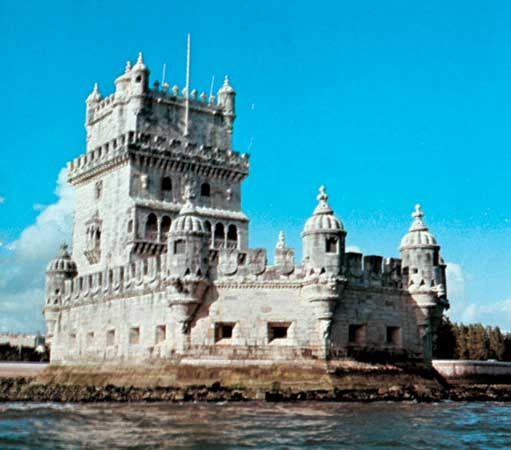
The Tower of Belém is a historic fortification located in Lisbon, Portugal, on the northern bank of the Tagus River estuary. Built between 1515 and 1521, it served as a defense for the entrance to the Tagus River. The tower is a prime example of Manueline architecture, a distinctive Portuguese style of the early 16th century that celebrates maritime exploration. It was designated a UNESCO World Heritage site in 1983, alongside the Jerónimos Monastery. The tower features a blend of Gothic, North African, and Renaissance elements.12
Ask Britannica AI about this topic
Britannica doesn't have a full article on this topic, so we've curated a list of our relevant coverage.
 LisbonCity layout
…I in 1499, and the Tower of Belém (1515–21; designated a UNESCO World Heritage site in 1983), which was built to defend the city. The Monument to the Discoveries (1960), on the Tagus River, commemorates Portuguese explorers of the 15th and 16th centuries. The Belém-Restelo district, a sumptuous residential area…
Read More…I in 1499, and the Tower of Belém (1515–21; designated a UNESCO World Heritage site in 1983), which was built to defend the city. The Monument to the Discoveries (1960), on the Tagus River, commemorates Portuguese explorers of the 15th and 16th centuries. The Belém-Restelo district, a sumptuous residential area…
Read More- LisbonThe Age of Discovery
…Manueline style in Lisbon, the Tower of Belém, designated a World Heritage site in 1983, and the Jerónimos Monastery, about 4 miles (6 km) downstream from the city centre, are far less exuberant than those in the rival Portuguese cities of Batalha and Tomar. The tower and the monastery are…
Read More…Manueline style in Lisbon, the Tower of Belém, designated a World Heritage site in 1983, and the Jerónimos Monastery, about 4 miles (6 km) downstream from the city centre, are far less exuberant than those in the rival Portuguese cities of Batalha and Tomar. The tower and the monastery are…
Read More