

Sonora
News •
-
Where is Sonora located in Mexico?
Sonora is a state in northwestern Mexico, bordering the United States (Arizona and New Mexico) to the north, Chihuahua to the east, Sinaloa to the south, and Baja California state and the Gulf of California to the west. The eastern part of Sonora is mountainous, with a mixed semiarid and subhumid climate, while the western part is dominated by the Sonoran Desert.
1 Britannica SourceCreated from Britannica articles using AI. AI can make mistakes, so verify using Britannica articles. -
What is the capital city of Sonora?
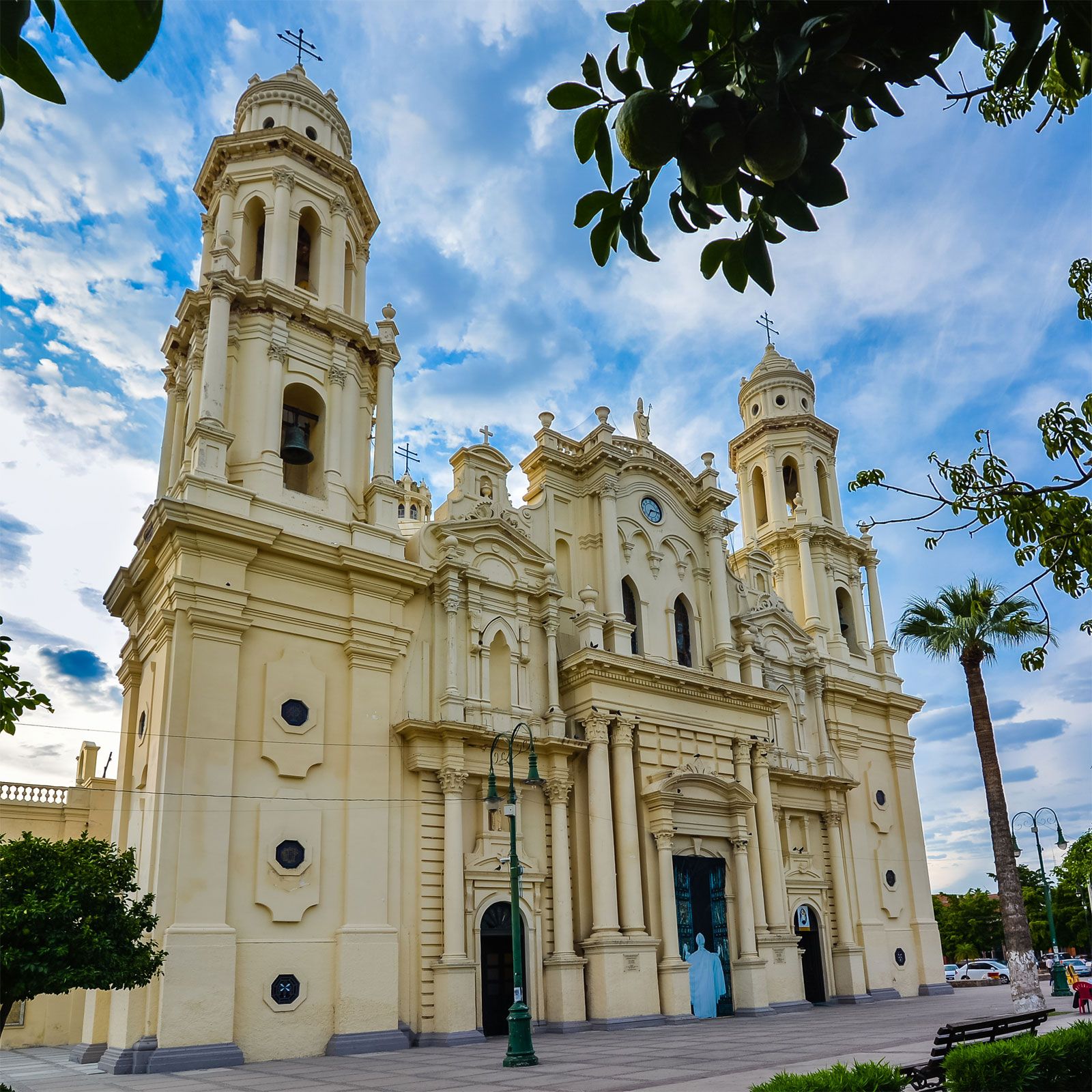
The capital of the state of Sonora in northwestern Mexico is Hermosillo. The city is in the west-central part of the state, near the Sonora and San Miguel rivers. Hermosillo's economy has been increasingly oriented toward trade with the United States since the 1980s, with growth in industry and export-oriented assembly plants. In addition to its industrial and administrative functions, Hermosillo is a winter resort and the site of the University of Sonora.
2 Britannica SourcesCreated from Britannica articles using AI. AI can make mistakes, so verify using Britannica articles. -
What kind of climate does Sonora have?
Sonora has a mixed semiarid and subhumid climate in its eastern, mountainous region, while the western part is dominated by the arid Sonoran Desert. The desert has a subtropical climate with rainfall between 3 and 15 inches per year, mainly during the monsoon season (July–September). The northern portion of Sonora can reach temperatures exceeding 110 °F (43 °C) in July and August.
4 Britannica SourcesCreated from Britannica articles using AI. AI can make mistakes, so verify using Britannica articles. -
What are some important industries or products in Sonora?
Sonora, a state in northwestern Mexico, has an economy boosted by maquiladoras (export-oriented assembly plants) that produce automobiles and other manufactures. The state yields nearly all of Mexico’s copper and a large proportion of its fish and pork. Since the 1940s, irrigation projects have helped develop the region around cities such as Hermosillo and Ciudad Obregón, producing vegetables, cereals, cotton, tobacco, chickpeas, and corn.
3 Britannica SourcesCreated from Britannica articles using AI. AI can make mistakes, so verify using Britannica articles. -
What are some major cities and towns in Sonora besides the capital?
The capital of Sonora is Hermosillo. Other major cities and towns include:
* Ciudad Obregón, a commercial center in the Yaqui Valley
* Guaymas, a port city on the Gulf of California
* Navojoa, a commercial and manufacturing center
* Heroica Nogales, a transportation hub at the Arizona borderThese cities have flourished since the 1940s due to irrigation projects that developed their agricultural hinterlands.
7 Britannica SourcesCreated from Britannica articles using AI. AI can make mistakes, so verify using Britannica articles. -
How do Sonora's culture and history make it unique within Mexico?
Sonora's unique culture and history stem from its diverse geography, indigenous heritage, and colonial past. Northwestern Mexico is home to native peoples such as the Seri, Yaqui, and Tarahumara. These groups have retained their languages and identities, blending Roman Catholicism with traditional practices.
Sonora became a state in 1830 and lost part of its northern lands to the United States in the Gadsden Purchase of 1853. The state's development has been influenced by mining, agriculture, and cross-border traffic. During the Mexican Revolution, Sonora produced national leaders such as Adolfo de la Huerta, Alvaro Obregón, and Plutarco Elías Calles. Today, Sonora preserves its culture through museums and ecological reserves.
4 Britannica SourcesCreated from Britannica articles using AI. AI can make mistakes, so verify using Britannica articles.
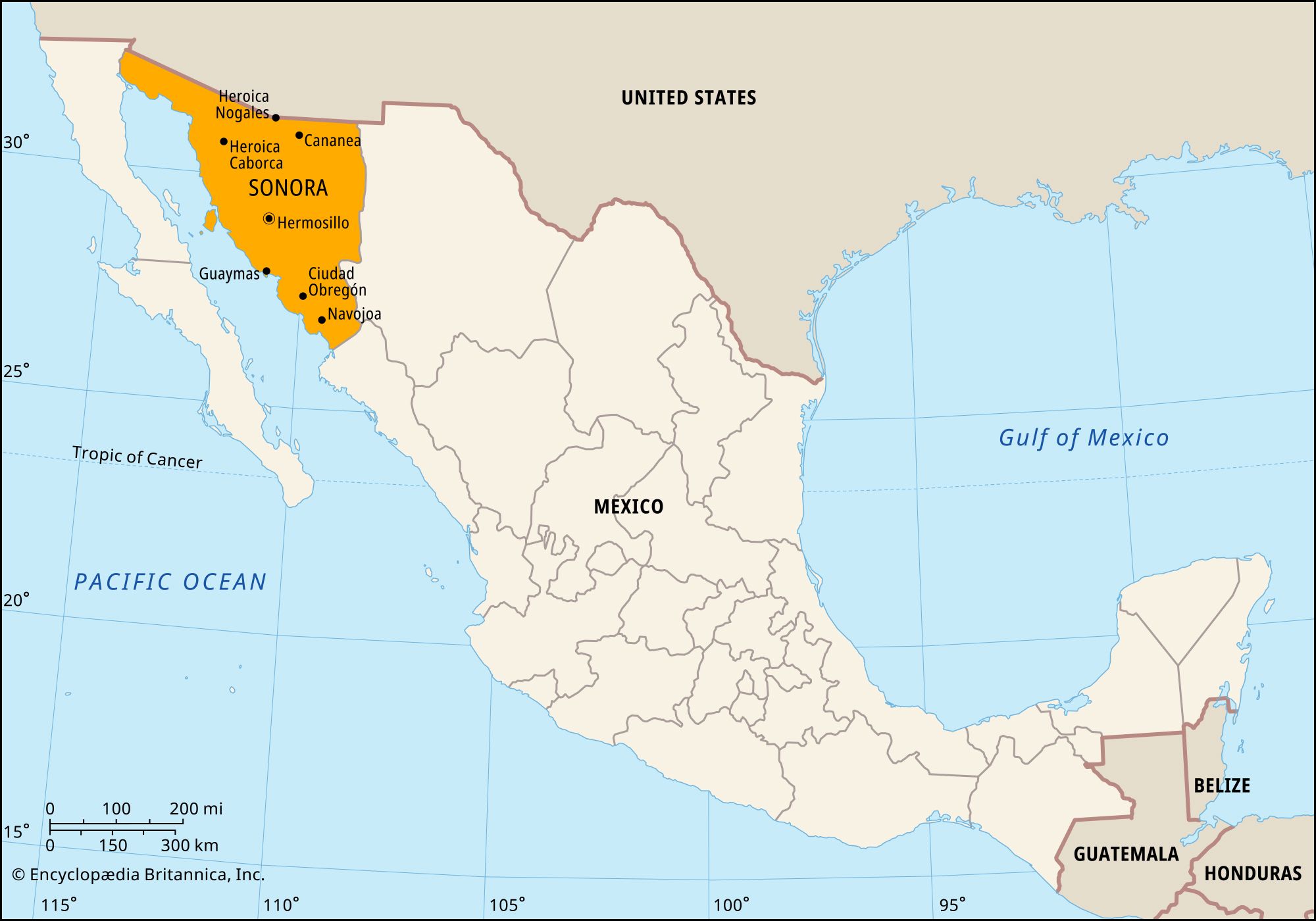
Sonora, estado (state), northwestern Mexico. It is bounded by the United States (Arizona and New Mexico) to the north, by the states of Chihuahua to the east and Sinaloa to the south, and by Baja California state and the Gulf of California (Sea of Cortez) to the west. Hermosillo is the state capital.
Eastern Sonora is a mountainous region with a mixed semiarid and subhumid climate. It encompasses the northwestern edge of the Sierra Madre Occidental. The Sonoran Desert dominates the western part of the state, which is covered by low, scattered mountains and wide plains. Despite its aridity, the Sonoran Desert has diverse plant and animal life.
The state’s population is clustered around Heroica Nogales, at the Arizona border (which is contiguous with the city of Nogales); Hermosillo; Guaymas, a gulf port and deep-sea fishing resort; and Ciudad Obregón, in the Yaqui River valley. Since the 1940s these and other communities have flourished, their hinterlands developed by irrigation projects producing vegetables, cereals, cotton, tobacco, chickpeas, and corn (maize). Major highways and railroads from Mexicali (Baja California state) and Heroica Nogales to Mexico City traverse the state. Airports are situated in the major cities.



Sonora produces nearly all of Mexico’s copper and a large proportion of its fish and pork. Since the late 20th century the spread of maquiladoras (export-oriented assembly plants), spurred by the North American Free Trade Agreement, has boosted the state’s output of automobiles and other manufactures. Cross-border traffic has also increased, because of greater exports and migration to the United States; however, there have also been heightened concerns regarding drug trafficking (with attendant violence and corruption) and the risks taken by undocumented migrants attempting to cross the desert.
Explored by Spaniards in the 1530s, Sonora became an important colonial copper-, gold-, and silver-mining district. It became a state in 1830 but lost part of its northern lands to the United States in the Gadsden Purchase of 1853. U.S. filibusterers brought further turmoil in subsequent decades, and the Yaqui Indian peoples fought until the 20th century to retain their independence. During the Mexican Revolution Sonora produced such national leaders as Adolfo de la Huerta, Alvaro Obregón, and Plutarco Elías Calles.
Sonora’s state government is headed by a governor, who is elected to a single term of six years; the representatives in the unicameral legislature, the State Congress, are elected for three-year terms. The state can levy taxes, but in reality it depends on the federal government for most of its revenue. Like other Mexican states, Sonora is divided into local governmental units called municipios (municipalities), each of which may include a city or town and its hinterland or, alternatively, a group of villages.
Several ecological reserves are located in Sonora, including the volcanic and desert region of El Pinacate y Gran Desierto de Altar Biosphere Reserve in the northwest and the Bay and Islands of San Jorge, a bird and marine habitat on the Gulf of California. The San Jorge area is part of a larger region of islands and coastal areas around the gulf collectively designated a UNESCO World Heritage site in 2005. Hermosillo has a museum dedicated to the preservation of Sonoran culture and a state historical museum. Area 70,291 square miles (182,052 square km). Pop. (2020) 2,944,840.
The trusted destination for professionals, college students, and lifelong learners.
SUBSCRIBE

