
Quick Facts
Also spelled:
Saronic Gulf
Also called:
Gulf of Aegina or Gulf of Aígina
Britannica AI Icon
Adding us as a Preferred Source tells Google you trust our content, so our articles show up more often in your Google Search, Discover feed, and AI Overviews.
verifiedCite
While every effort has been made to follow citation style rules, there may be some discrepancies. Please refer to the appropriate style manual or other sources if you have any questions.
Select Citation Style
Feedback
Corrections? Updates? Omissions? Let us know if you have suggestions to improve this article (requires login).
Thank you for your feedback

Our editors will review what you’ve submitted and determine whether to revise the article.

Saronikós Gulf

gulf, Greece
Also known as: Gulf of Aígina, Gulf of Aegina, Saronic Gulf

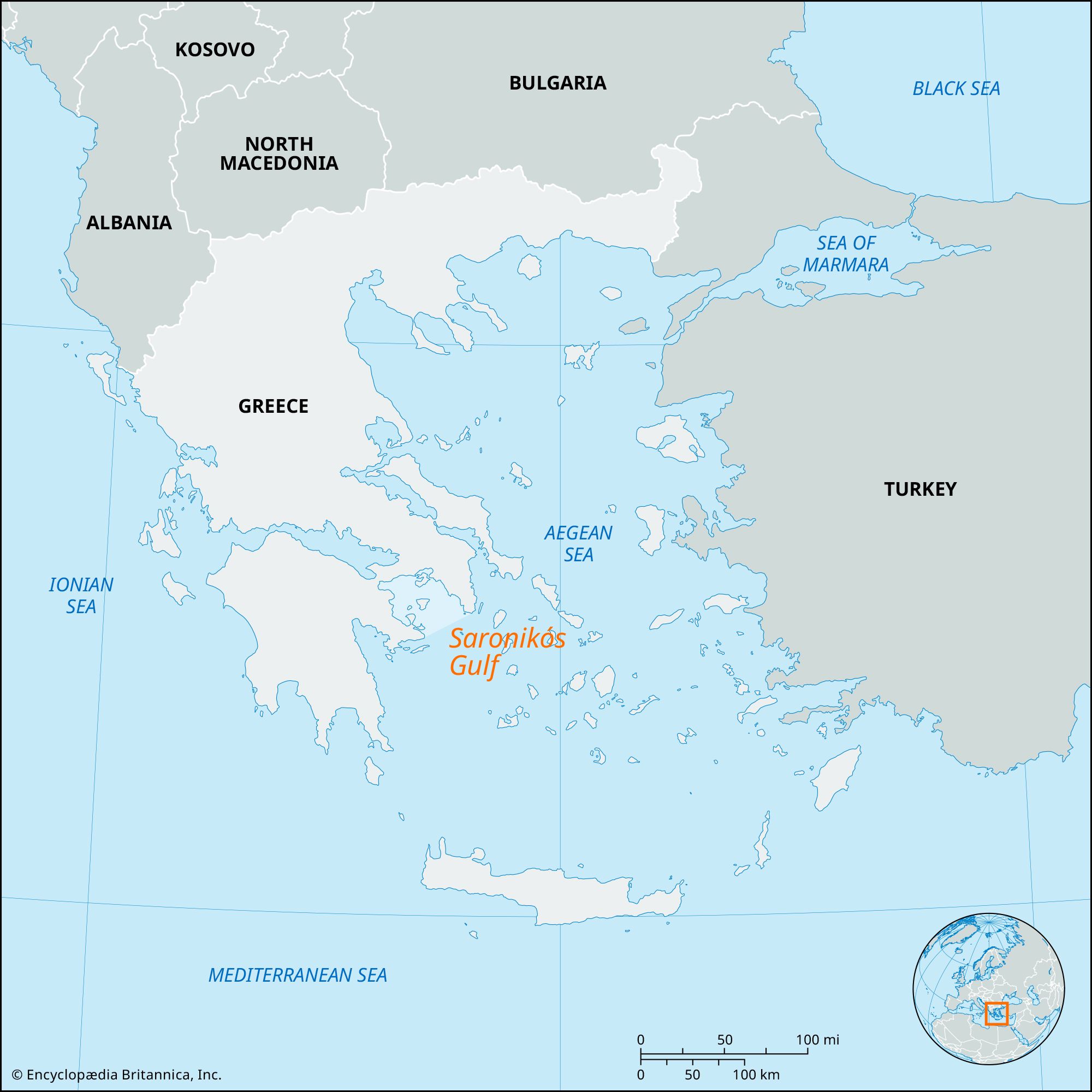
Saronikós Gulf, gulf of the Aegean Sea between Ákra (cape) Soúnion of the Attica (Modern Greek: Attikí) peninsula and Ákra Skíllaion of the Argolís peninsula of the Greek Peloponnese (Pelopónnisos). A maximum of 50 miles (80 km) long northwest-southeast and about 30 miles wide, it is linked on the west to the Gulf of Corinth (Korinthiakós) by the Corinth Canal. At its widest point the gulf is divided by three of the Saronic islands: Salamís, Aígina, and Póros. Piraeus, the port of Athens (Athína) and largest port of Greece, is situated due east of Salamís; the ports of Elevsís and Mégara lie north and northwest, respectively, of Salamís. Off the much indented coast of Salamís, Athenian naval and land forces achieved a crushing victory over a massive Persian naval force in 480 bce.


The Editors of Encyclopaedia Britannica This article was most recently revised and updated by Adam Augustyn.
Discover the fascinating events that shaped the world, straight from our editors.
By clicking “Sign Up”, you consent to the Britannica Privacy Policy and Terms of Use.
