
Mungo National Park
Quick Summary
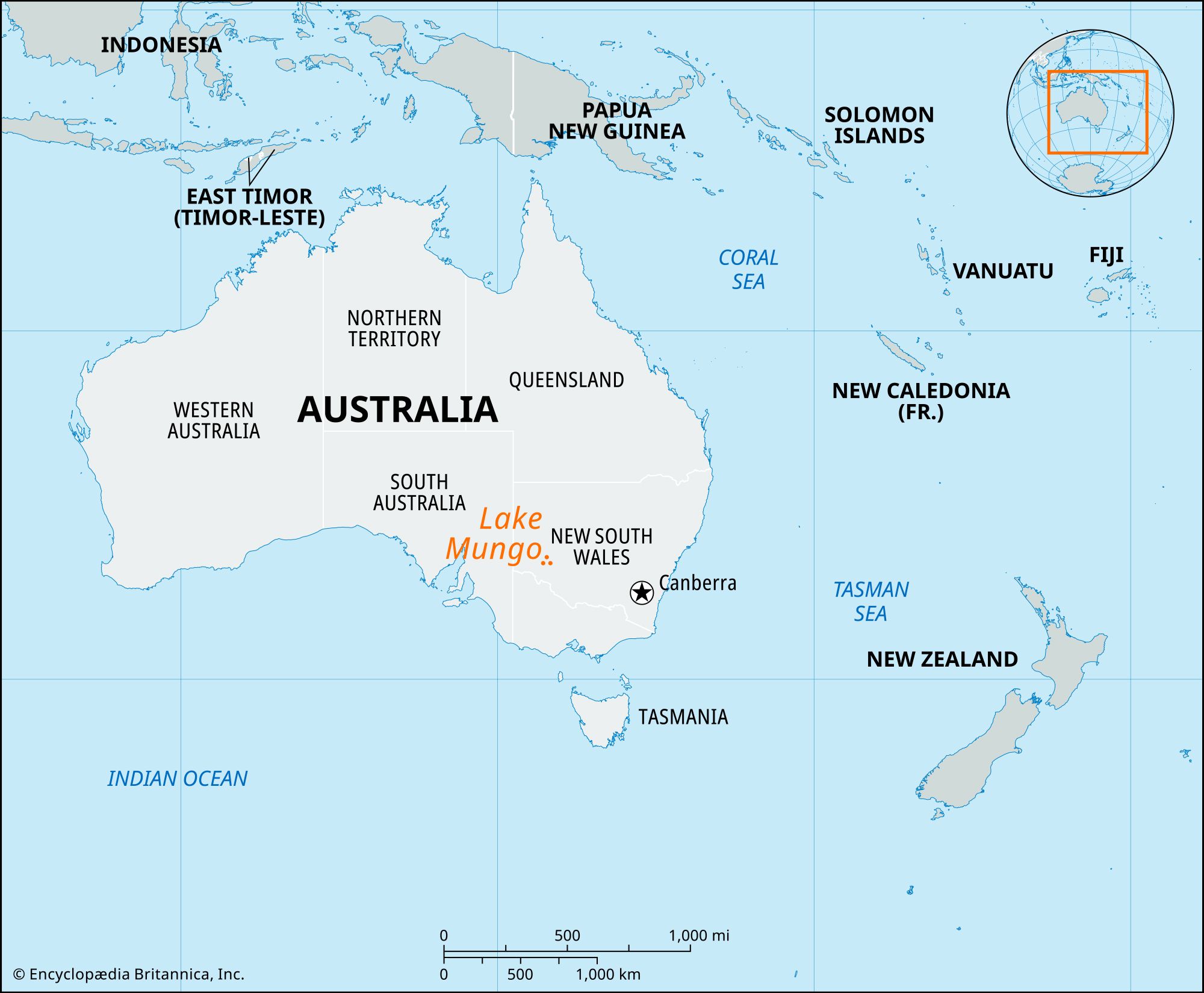
Mungo National Park is located in New South Wales, Australia, and is part of the Willandra Lakes region, a World Heritage site. The park contains 17 dried Pleistocene Epoch lake beds.
The area is renowned for its archaeological significance, particularly the discovery of ancient human remains. In 1968, the skeleton of an Aboriginal woman, known as Mungo Lady, was found. Her remains showed evidence of cremation, making it the world's oldest known example of this practice. In 1974, the skeleton of Mungo Man was discovered. Both Mungo Lady and Mungo Man were dated to approximately 40,000 years old, representing the oldest human remains found in Australia at that time.1
Further discoveries in the park include hundreds of artifacts and other human remains, providing a continuous record of Aboriginal life and adaptation to environmental changes. These findings offer insights into their diet, tools, and daily practices
Ask Britannica AI about this topic
Britannica doesn't have a full article on this topic, so we've curated a list of our relevant coverage.