
Britannica AI Icon
Adding us as a Preferred Source tells Google you trust our content, so our articles show up more often in your Google Search, Discover feed, and AI Overviews.
verifiedCite
While every effort has been made to follow citation style rules, there may be some discrepancies. Please refer to the appropriate style manual or other sources if you have any questions.
Select Citation Style
Feedback
Corrections? Updates? Omissions? Let us know if you have suggestions to improve this article (requires login).
Thank you for your feedback

Our editors will review what you’ve submitted and determine whether to revise the article.

Lake of the Ozarks

lake, Missouri, United States

News •

Shelby County school board electee, husband killed in MO plane crash • Nov. 5, 2026, 4:19 PM ET (Lexington Herald-Leader)
Two people from Kentucky dead in Lake Ozark plane crash, officials say • Nov. 4, 2026, 2:58 PM ET (Lexington Herald-Leader)

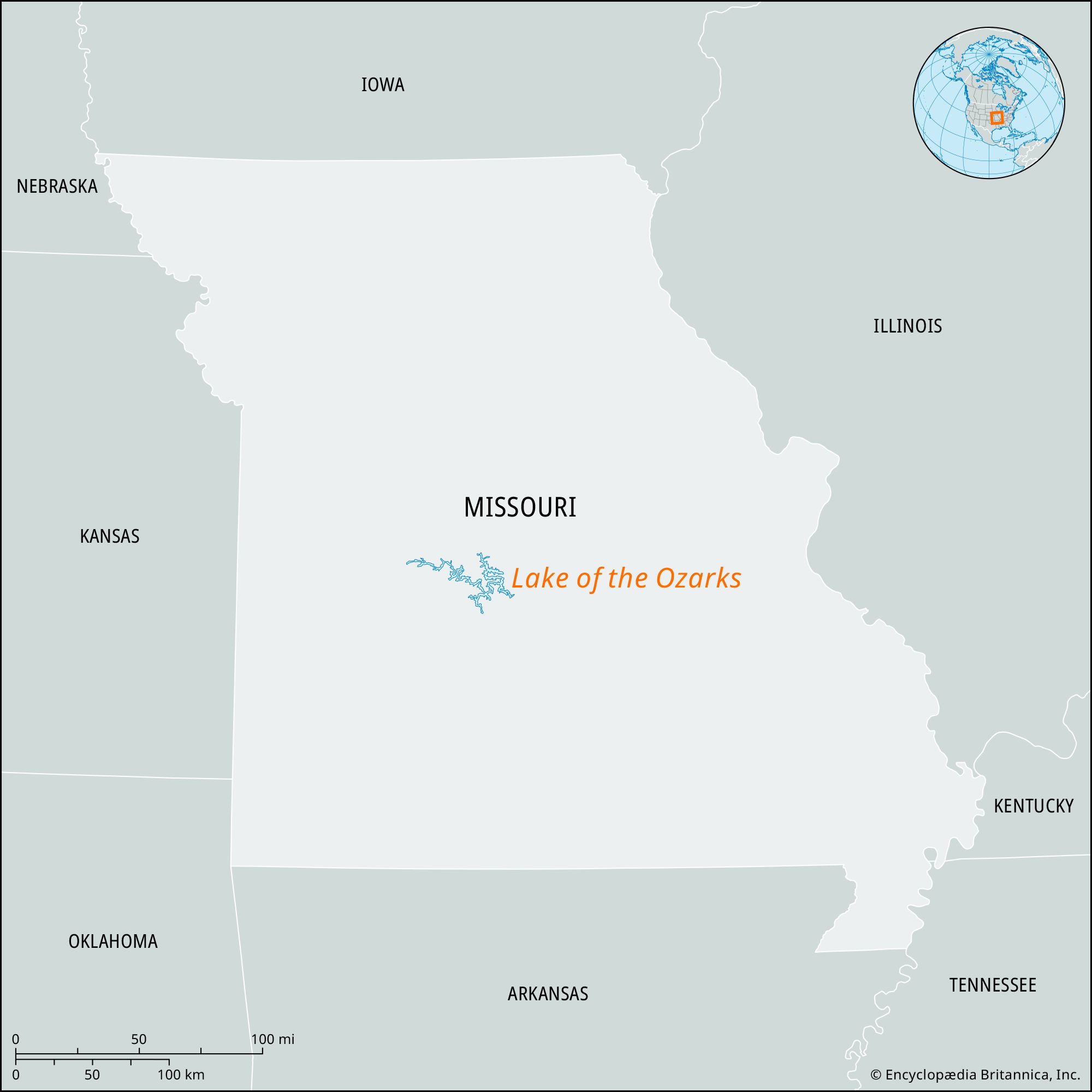
Lake of the Ozarks, lake in south-central Missouri, U.S., in the scenic Ozark Mountains about 42 miles (68 km) southwest of Jefferson City. One of the largest artificial lakes in the United States, it is impounded by Bagnell Dam, built (1929–31) across the Osage River to provide hydroelectric power for the St. Louis area. Covering an area of 93 square miles (241 square km), the lake is approximately 90 miles (145 km) long and has a shoreline of more than 1,100 miles (1,770 km). The lake, with facilities for fishing and aquatic sports, is a popular recreation and resort area. There are several limestone caverns nearby. Lake of the Ozarks State Park includes most of the Grand Glaize arm of the lake, with 90 miles (145 km) of shoreline. Ha Ha Tonka State Park is on the Niangua arm, to the south. The Harry S. Truman Dam and Reservoir began operation in 1979 and impounds the Osage and Grand rivers to extend facilities at the lake’s western end.


The Editors of Encyclopaedia Britannica This article was most recently revised and updated by Michael Ray.
Discover the fascinating events that shaped the world, straight from our editors.
By clicking “Sign Up”, you consent to the Britannica Privacy Policy and Terms of Use.
