
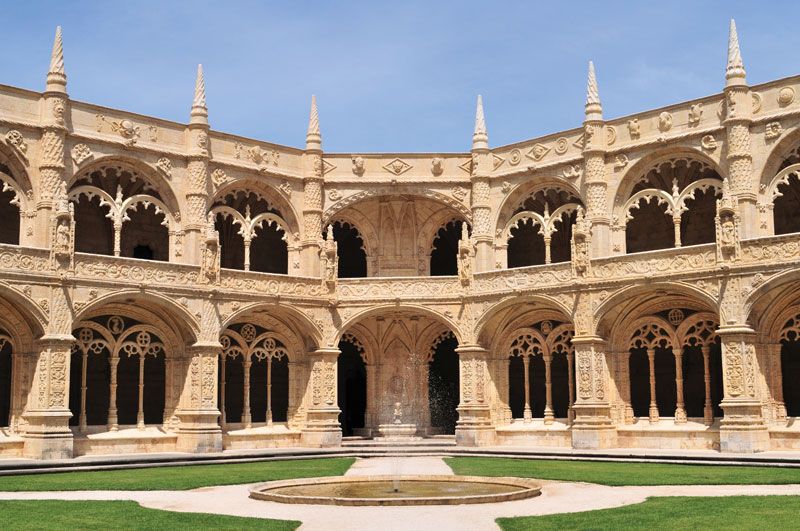

Jerónimos Monastery
Quick Summary

The Jerónimos Monastery, originally known as the Monastery of Santa Maria da Vitória, is a significant example of Manueline architecture, a distinctive Portuguese style that flourished in the early 16th century. Commissioned by King Manuel I, it was intended as a royal burial monument and later to honor the explorer Vasco da Gama, whose tomb is housed within its walls.12
Located in Belém, Lisbon, the monastery was designed by Diogo Boitac and later worked on by architects like João de Castilho and Diogo de Torralva. Its intricate facades and interiors showcase masterful craftsmanship, incorporating nautical motifs such as ropes, anchors, and shells, reflecting Portugal's Age of Discovery. The monastery features chapels, cloisters, a church, and the tombs of Portuguese monarchs, as well as poets Luís de Camões and Fernando Pessoa. It is considered the finest example of Manueline architecture globally.13
Ask Britannica AI about this topic
Britannica doesn't have a full article on this topic, so we've curated a list of our relevant coverage.
